
 Tiếng Việt
Forex Technical Analysis
Forex Technical Analysis is the method traders use to analyze price charts and historical data to predict market direction. It helps traders make objective trading decisions based on data instead of emotions.
Indicators in Forex Technical Analysis are tools that help traders measure momentum, trend, and volatility. Using indicators correctly allows you to identify entry and exit points more accurately.
Identifying Market Trends means recognizing whether the market is moving up, down, or sideways based on price structure and trendlines. This helps traders follow the trend and avoid false trading signals.
What Is Forex Technical Analysis?

Forex Technical Analysis is the process of evaluating price charts, historical data, and patterns to forecast future market movements. Instead of relying on news or economic reports, traders focus on price action and technical signals.
This method is widely used in forex trading strategies, especially for short-term and intraday trading. By analyzing charts, traders can identify repeating patterns and make data-driven decisions.
Technical analysis is built on three core principles:
- Price reflects all market information
- Prices move in trends
- Historical patterns tend to repeat
Understanding these principles creates a strong foundation for using technical tools effectively. To see how this works in practice, let’s explore real trading applications.
How Forex Technical Analysis Works in Real Trading
In real trading environments, technical analysis is applied through charting platforms like MT4 or MT5. Traders use indicators, trendlines, and candlestick patterns to determine entry and exit points.
For example:
- Identifying support and resistance levels
- Using moving averages to confirm trends
- Applying RSI to detect overbought or oversold conditions
These methods are commonly integrated into XM trading to improve timing and reduce emotional decisions.
Benefits of Using Technical Analysis in Forex Trading
Using technical analysis provides several advantages:
- Better entry and exit timing
- Objective decision-making based on data
- Adaptability across different markets and timeframes
- Compatibility with automated trading systems
Because of these benefits, technical analysis is often combined with risk management techniques and trading plans. The next step is understanding the tools that power this method—forex indicators.
What Are Forex Indicators?
Forex indicators are essential tools used to interpret price data and market conditions. They are mathematical calculations that help traders analyze trends, momentum, and volatility.
Indicators are widely used in both beginner and advanced trading systems. However, choosing the right indicators is crucial for accurate analysis.
Types of Forex Indicators Every Trader Should Know
There are four main types of indicators every trader should understand:
- Trend indicators: Moving Average, MACD
- Momentum indicators: RSI, Stochastic
- Volatility indicators: Bollinger Bands
- Volume indicators: Tick Volume
Each type plays a different role. For instance, trend indicators show direction, while momentum indicators help confirm strength.
These indicators are often used together in technical trading systems to improve reliability.
How to Combine Indicators for Better Accuracy
Combining indicators is a common technique to reduce false signals. Instead of relying on a single tool, traders use multiple indicators for confirmation.
A simple combination strategy:
- Moving Average → identify trend
- RSI → confirm momentum
- Bollinger Bands → measure volatility
This approach helps traders build a more structured system. However, overloading charts with too many indicators can reduce clarity, so simplicity is key.
Once you understand indicators, the next step is applying them to identify market trends.
How to Identify Market Trends in Forex Trading?
Market trends define the overall direction of price movement. Trading with the trend is one of the most effective ways to increase success rates.
There are three main trend types:
- Uptrend: Higher highs and higher lows
- Downtrend: Lower highs and lower lows
- Sideways: Price moves within a range
Recognizing these patterns is essential for applying any forex technical analysis strategy effectively.
Key Methods to Recognize Trends in Forex Markets
Traders use several methods to identify trends:
- Trendlines: Visual support and resistance
- Moving averages: Smooth price data
- Price structure analysis: Observe highs and lows
- Indicators like MACD: Confirm trend direction
Combining these methods improves accuracy and helps traders avoid false signals.
Common Mistakes When Identifying Market Trends
Many traders make avoidable mistakes when analyzing trends:
- Ignoring higher timeframe confirmation
- Entering trades too early or too late
- Misreading sideways markets as trends
- Over-relying on indicators without price action
Avoiding these mistakes is critical for improving performance. With proper trend identification, traders can begin to master technical analysis.
How to Master Forex Technical Analysis for Consistent Trading Results
Mastering Forex Technical Analysis requires continuous practice and refinement. It is not just about understanding indicators but applying them consistently in real market conditions.
To improve your results:
- Practice using demo accounts
- Focus on a small set of reliable indicators
- Build a clear trading plan
- Track performance with a trading journal
Over time, combining technical analysis with discipline and risk management will help you develop a consistent trading edge. Forex Technical Analysis is most effective when integrated into a complete trading system. By combining indicators, trend analysis, and risk management, traders can improve decision-making and long-term performance.
To get started, focus on mastering the basics, test your strategies, and continuously refine your approach. This is the key to building a sustainable and profitable trading journey.
Additionally, you can refer to the detailed XM guide, which specifies trading methods and how to execute orders correctly, ensuring fast and secure transactions.
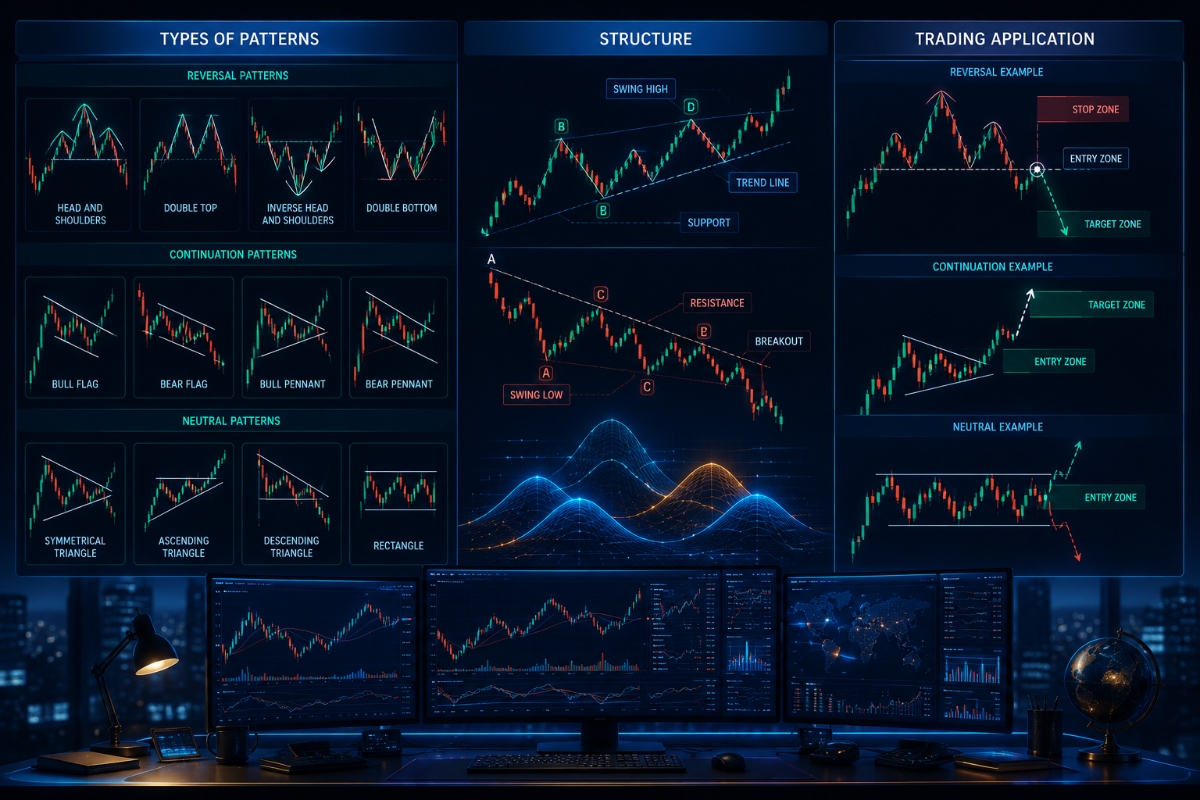
Chart Patterns: Types of patterns, Structure, Trading Application
Chart patterns are technical price formations that help traders predict market direction with higher probability,...
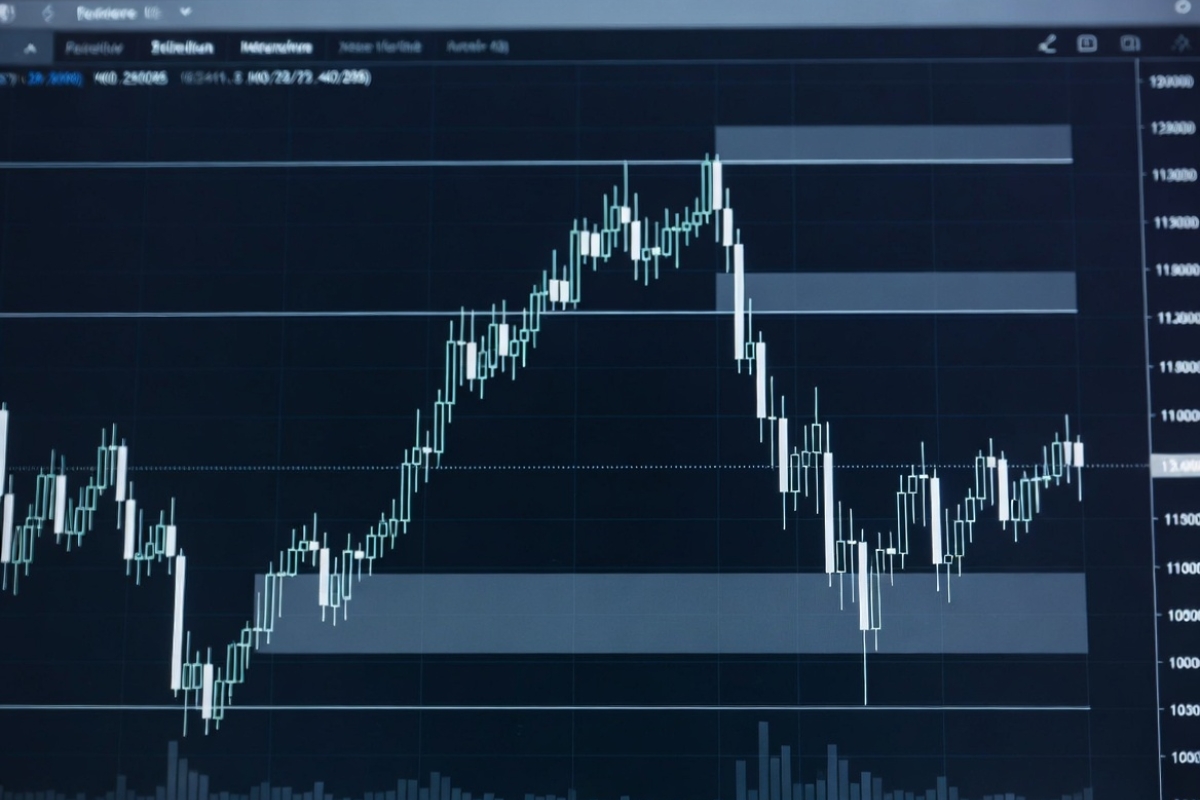
Support and Resistance: Identify Key Levels with XM Charts
Support and Resistance are key price levels where the market tends to reverse or pause,...
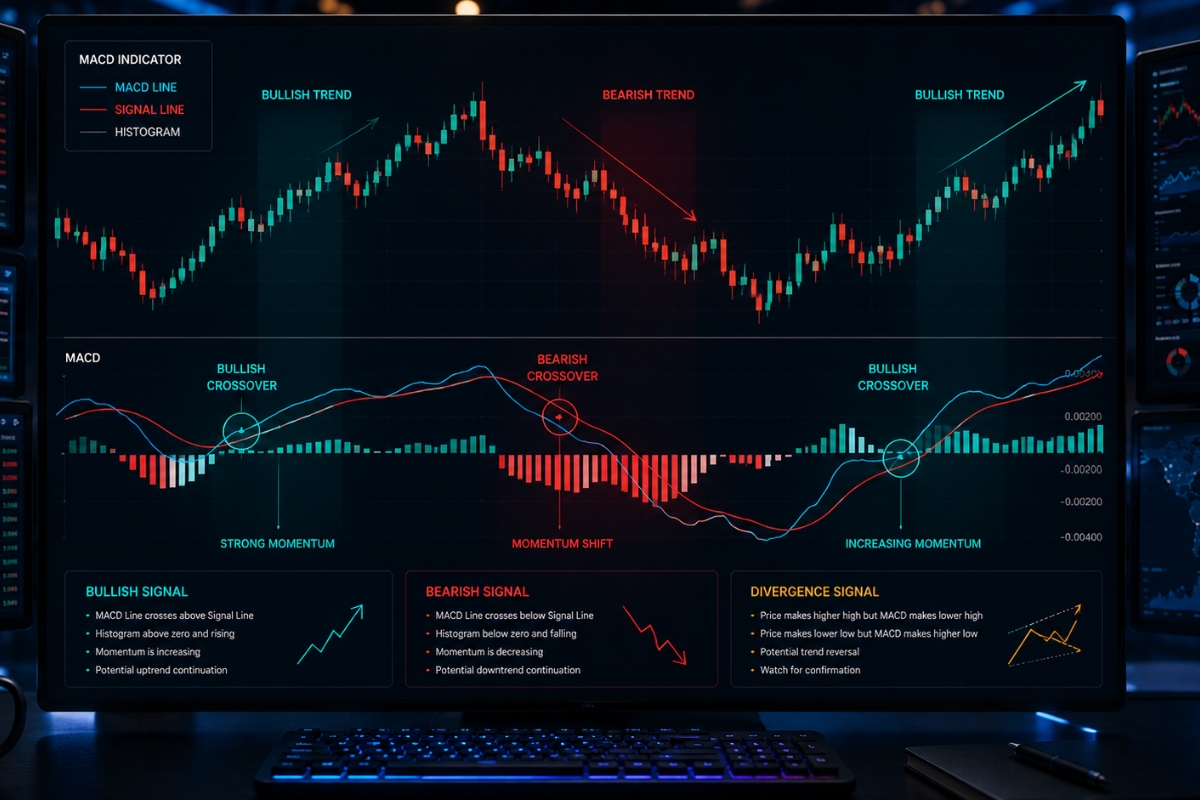
MACD Indicator: Convergence Divergence, Signals, Strategy
MACD Indicator is a momentum-based technical indicator that measures trend strength and direction using moving...

Forex Charts: How to Read, Patterns, Gold Analysis, Trading
Forex charts are visual tools that display price movements over time and help traders read...
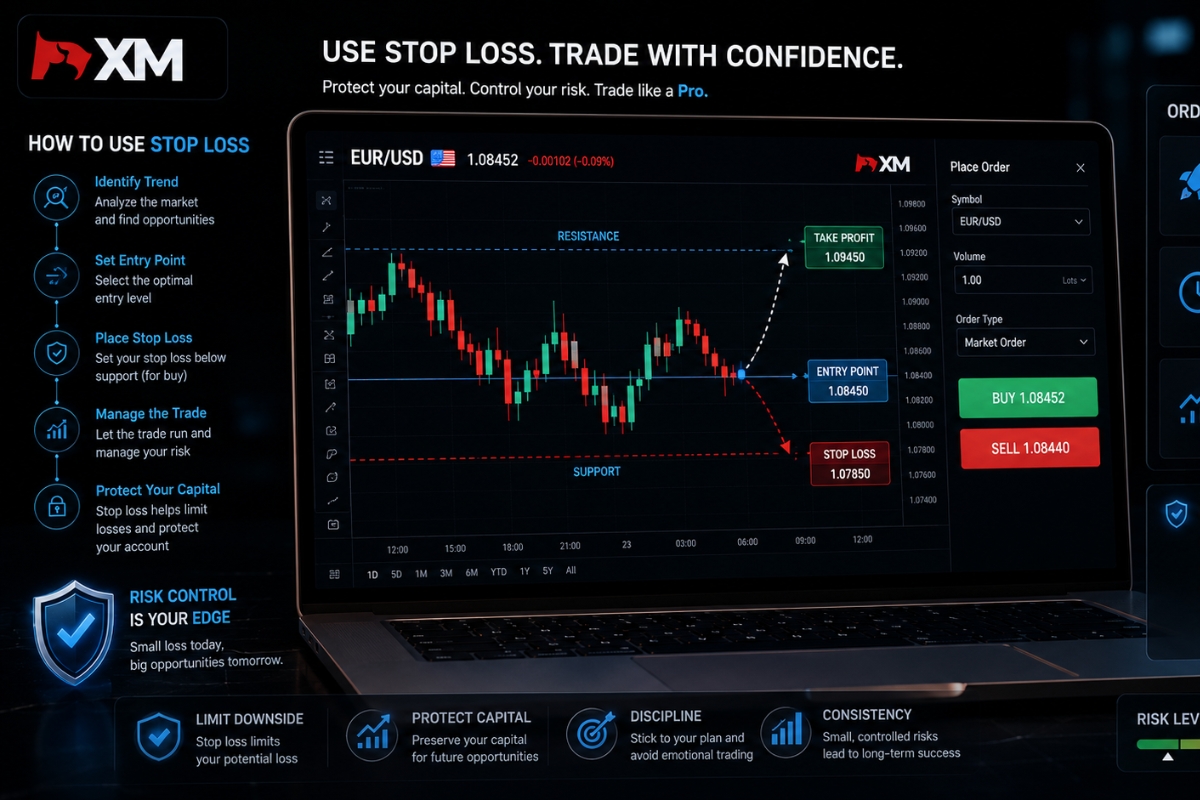
Stop Loss XM: Order Types and How to Set It Effectively
Stop Loss XM is a risk management tool that automatically closes a trade at a...
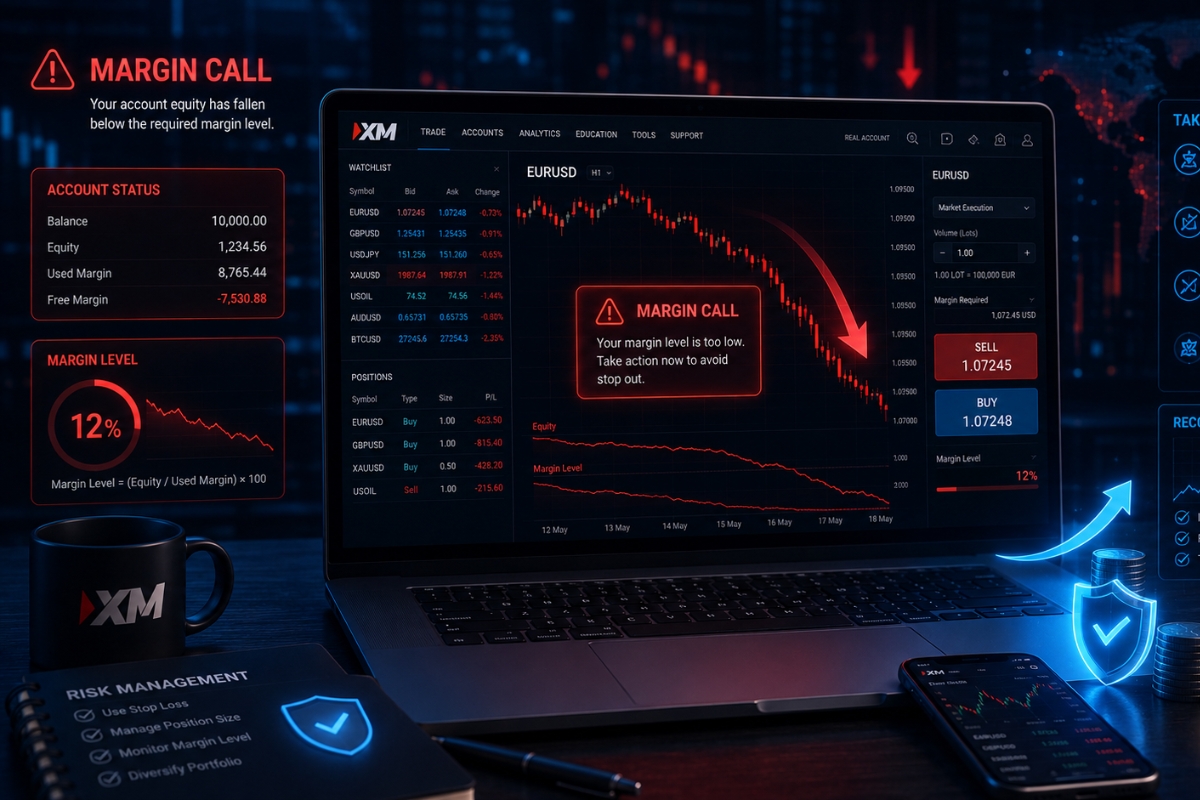
Margin Call: Meaning, Trigger, Example and Risk Management
Margin call is a warning from the broker when your margin level falls below the...
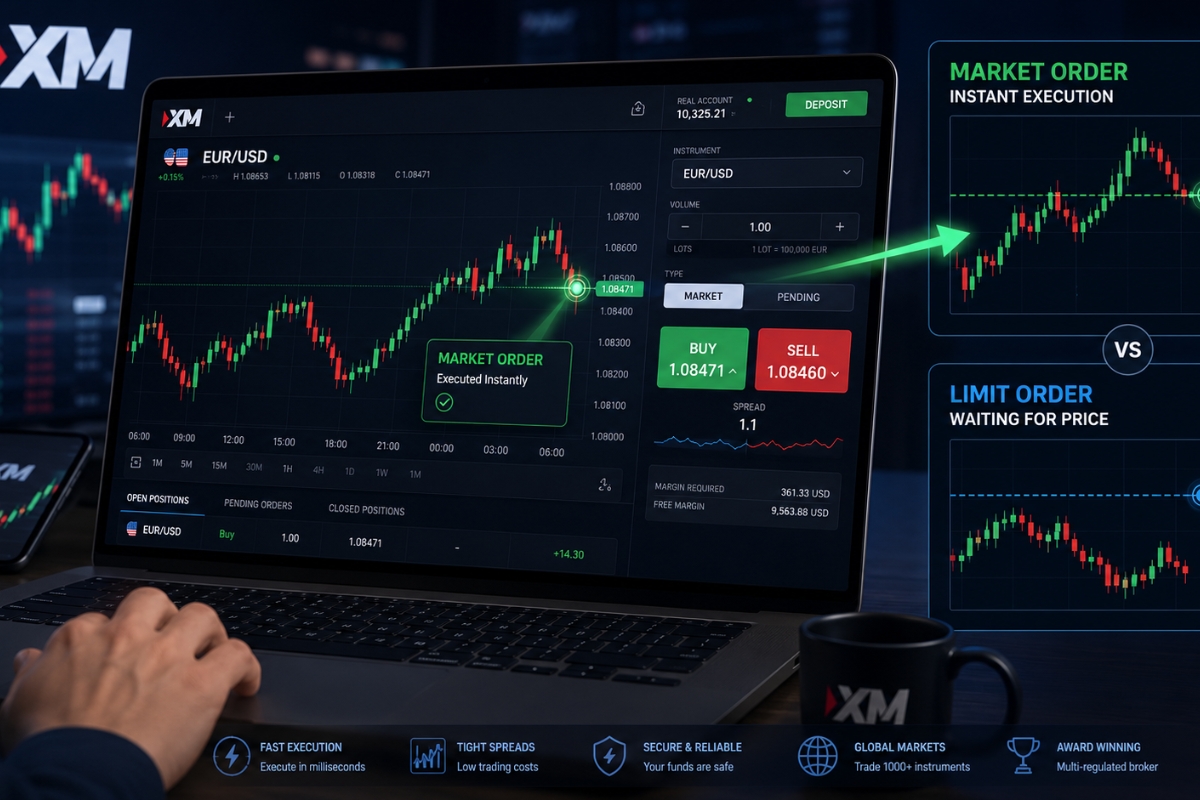
Market Orders on XM: How They Work, Types, Forex Use and Limit Orders
Market orders on XM are executed instantly at the current market price, allowing traders to...

CFDs XM: Definition, Markets, Profitability, How They Work
CFDs XM are derivative products that allow traders to speculate on price movements without owning...

Risk Management: Definition, Process, Theory, Trading Application
Risk management is the process of identifying, controlling, and minimizing potential losses in trading and...

Momentum Trading: Overview, Indicators, Strategy and Market Use
Momentum trading is a strategy that focuses on trading assets moving strongly in one direction,...