
 Tiếng Việt

XM Commission is $0 for Forex and most CFD trades, as XM uses a spread-based pricing model where costs are included directly in the spread instead of separate fees.
XM spreads typically start from 0.6–1.0 pip, and this spread is the main factor affecting trading cost and overall performance.
XM trading cost = spread + commission (only for Shares accounts), allowing traders to calculate total expenses clearly before entering a trade.
XM only charges commission on Shares accounts, while Micro, Standard, and Ultra Low accounts remain commission-free.
XM provides transparent pricing with no hidden fees, and traders can further reduce costs by choosing low-spread accounts and trading during high liquidity sessions.
Overall, XM Trading Fees with spreads are the primary cost driver. Understanding this helps traders manage risk and maximize profitability.
XM commission structure and pricing model
The XM commission structure is built on a foundation of transparency and versatility, catering to over 10 million clients worldwide. XM primarily operates on a “spread-based” pricing model for most of its accounts (Micro, Standard, and Ultra Low), meaning the cost of trading is integrated into the difference between the buy and sell price.
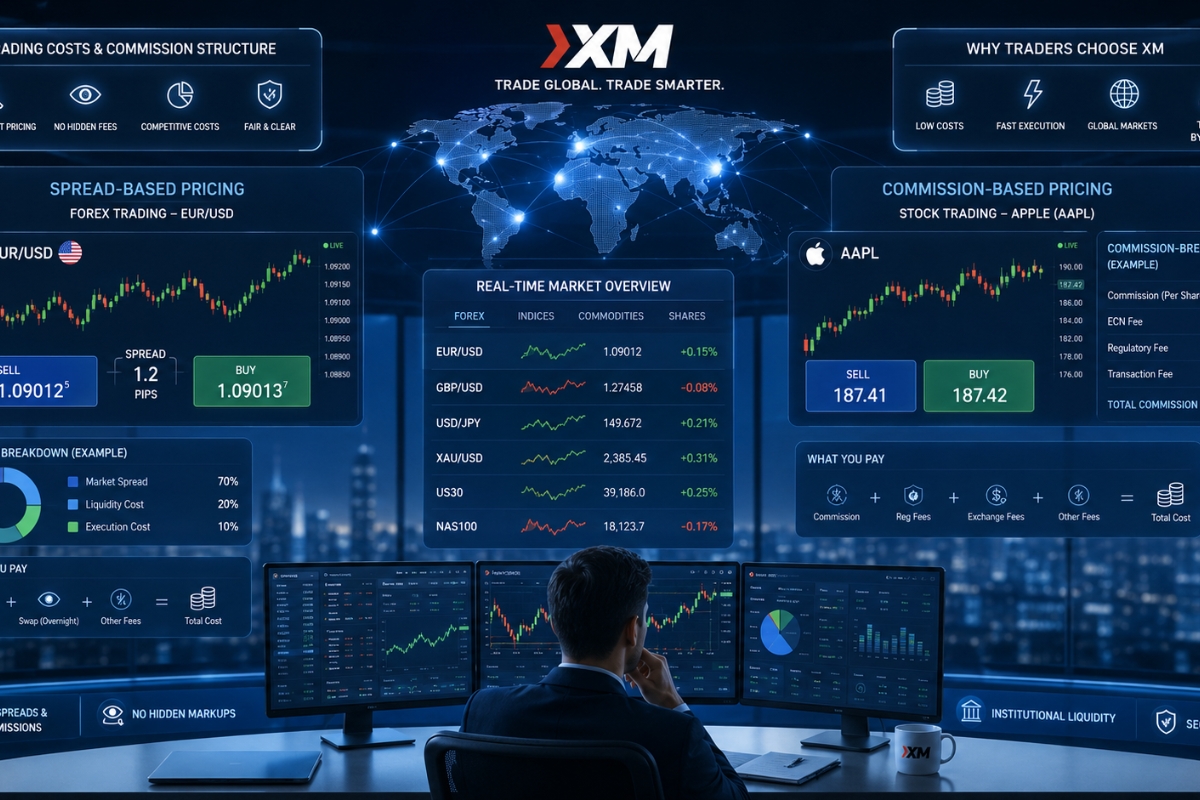
However, for specialized equity trading, a fixed commission model is applied. This hybrid approach ensures that whether you are trading 0.01 lots of EUR/USD or 100 shares of Apple, you are getting a price that reflects real-time market liquidity and institutional-grade execution.
To truly master your trading overhead, it is crucial to understand the specific instances where a direct fee is triggered.
What is the XM commission fee and when is it charged?
An XM commission fee is a direct service charge applied to specific asset classes or account types. Unlike spreads, which are variable, commissions are often fixed or percentage-based.
- Forex and Commodities: On Standard and Micro accounts, these are typically commission-free.
- Shares Account: This is the primary account where commissions are charged. For example, trading US stocks incurs a commission (e.g., $0.04 per share with a minimum of $1), while German stocks may carry a percentage-based fee.
- Timing: The fee is usually deducted at the moment the position is opened, though it covers the entire “round-turn” (opening and closing) of the transaction.
While direct fees are easy to spot, comparing them to spread-based pricing requires a more nuanced perspective.
How does XM commission differ from spread-based pricing?
The core difference lies in how the broker generates revenue and how the trader perceives the cost.
- Spread-Based (Standard/Micro/Ultra Low): The cost is “invisible” until you see the initial negative balance upon opening a trade. It is simpler for beginners to manage.
- Commission-Based (Shares Account): The spread is often “raw” (very close to the interbank price), but a separate fee is visible in your terminal’s “Commission” column.
Many professional strategists at MBroker recommend commission-free accounts for high-frequency Forex trading to keep the math simple and execution swift.
Understanding the pricing model leads us to the most frequent cost any trader faces: the Forex spread.
XM forex spread and its impact on trading cost
The XM forex spread is the primary “toll” you pay to enter the market. XM utilizes fractional pip pricing, which provides more precise quotes and enables tighter spreads than many competitors. For instance, on the Ultra Low Account, spreads on major pairs like EUR/USD can go as low as 0.6 pips.

This means the market only needs to move a tiny fraction in your direction for trade to become profitable, which is a significant advantage for short-term traders.
The impact of these spreads extends far beyond the initial entry; they dictate the very feasibility of your trading performance.
How do XM forex spreads affect trading performance?
Spreads act as a “friction” on your account’s growth. If you are a scalper aiming for 10 pips of profit, a 2-pip spread represents 20% of your potential gain.
- Profit Threshold: Lower spreads mean your “Take Profit” targets are reached sooner.
- Stop Loss Accuracy: High spreads can trigger “Stop Loss” orders prematurely during volatile sessions.
- Compounding Effect: Over 1,000 trades, saving even 0.5 pips per trade can result in thousands of dollars in saved capital.
This performance impact is why choosing between a raw spread with commission or a marked-up spread is so vital.
What is the relationship between XM commission and spread?
In a standard broker-client relationship, these two elements are usually in a “tug-of-war.”
- Low Spread + High Commission: Common in ECN-style accounts.
- High Spread + Zero Commission: Common in standard retail accounts.
- XM offers a unique middle ground. Their Ultra Low Account effectively offers the “best of both worlds”—spreads that are significantly lower than industry averages without the burden of a per-trade commission. This makes it one of the most cost-effective environments for Forex available today.
With the mechanics of spreads and commissions clear, let’s look at the actual numbers you will see on your screen.
XM commission per trade and total cost calculation
Calculating the XM commission per trade is a vital skill for maintaining a healthy risk-to-reward ratio. For the Shares account, the math is: Volume x CommissionRate. For all other accounts, the “cost” is: Spread x PipVale x LotSize By performing this calculation before every trade, you ensure that you are never “over-leveraged” and that your profit targets are realistic relative to the costs incurred.
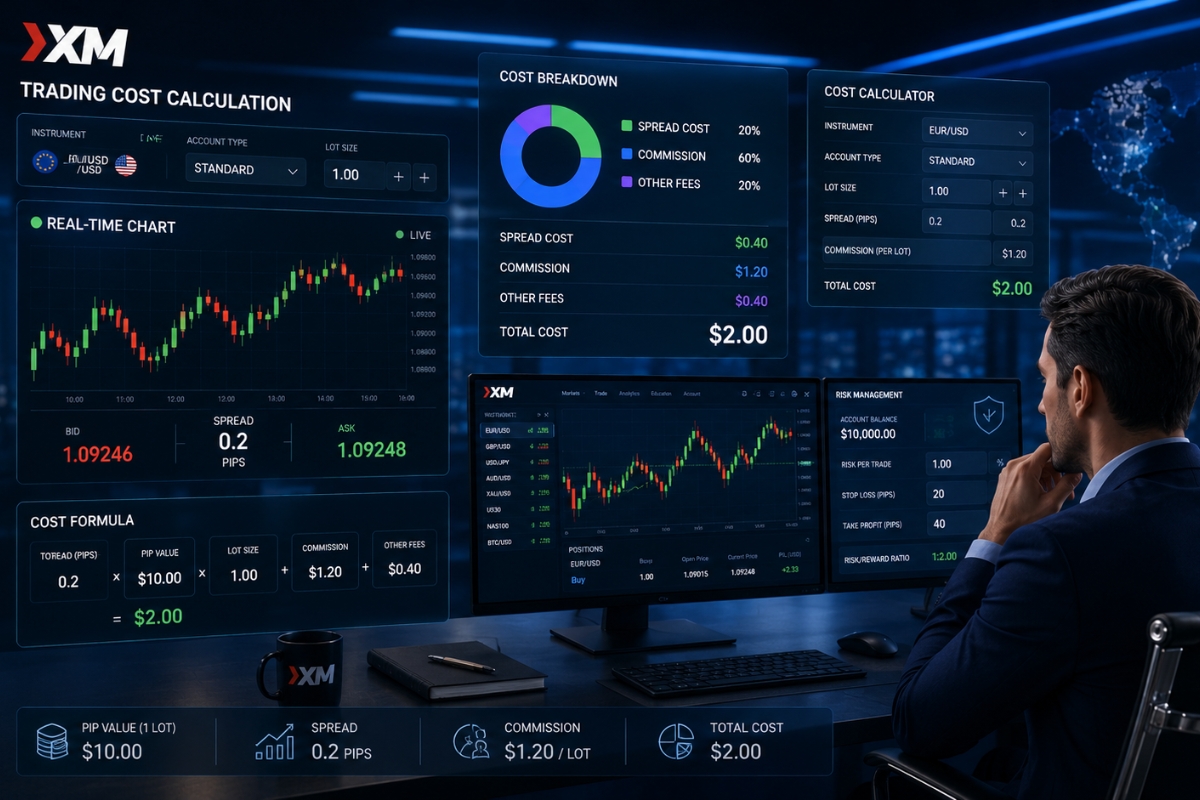
To simplify this for daily operations, it is helpful to look at the specific breakdown of how these costs are estimated.
How is XM commission per trade calculated?
For those trading on the Shares account, the calculation is transparent. If the commission is $$0.10\$$ and you buy $$5,00$$ worth of stock, your commission is 5. However, for Forex traders, the calculation focuses on the “Spread Cost”:
- Formula: (Ask Price – Bid Price) x Contract Size x Lost
- Example: If the spread on GBP/USD is $$1.$$ pips and you trade $$$$ Standard Lot 100,000 units), your cost is approximately $$1$$.
- This immediate transparency allows users to adjust their position sizing on the fly.
For those who prefer automation over manual math, XM provides sophisticated digital tools.
How to estimate trading cost using XM commission calculator?
The XM All-in-One Calculator is an essential tool for every professional. It allows you to:
- Input Account Details: Select your base currency and leverage.
- Select Instrument: Choose from over 1,000 assets.
- Instant Results: The tool provides the Pip Value, Swap rates, and the required margin.
- By utilizing this calculator, which is a staple recommendation on the MBroker platform, traders can eliminate guesswork and manage their capital with surgical precision.
This cost calculation varies significantly depending on the account environment you choose to operate in.
XM commission account types and trading conditions
The genius of the XM pricing model lies in its diversity. XM offers four primary account types, each calibrated for a specific type of trader. The Micro Account is perfect for testing strategies with minimal risk; the Standard Account is for general retail trading; the Ultra Low Account is for those who prioritize tight spreads; and the Shares Account is for equity specialists.
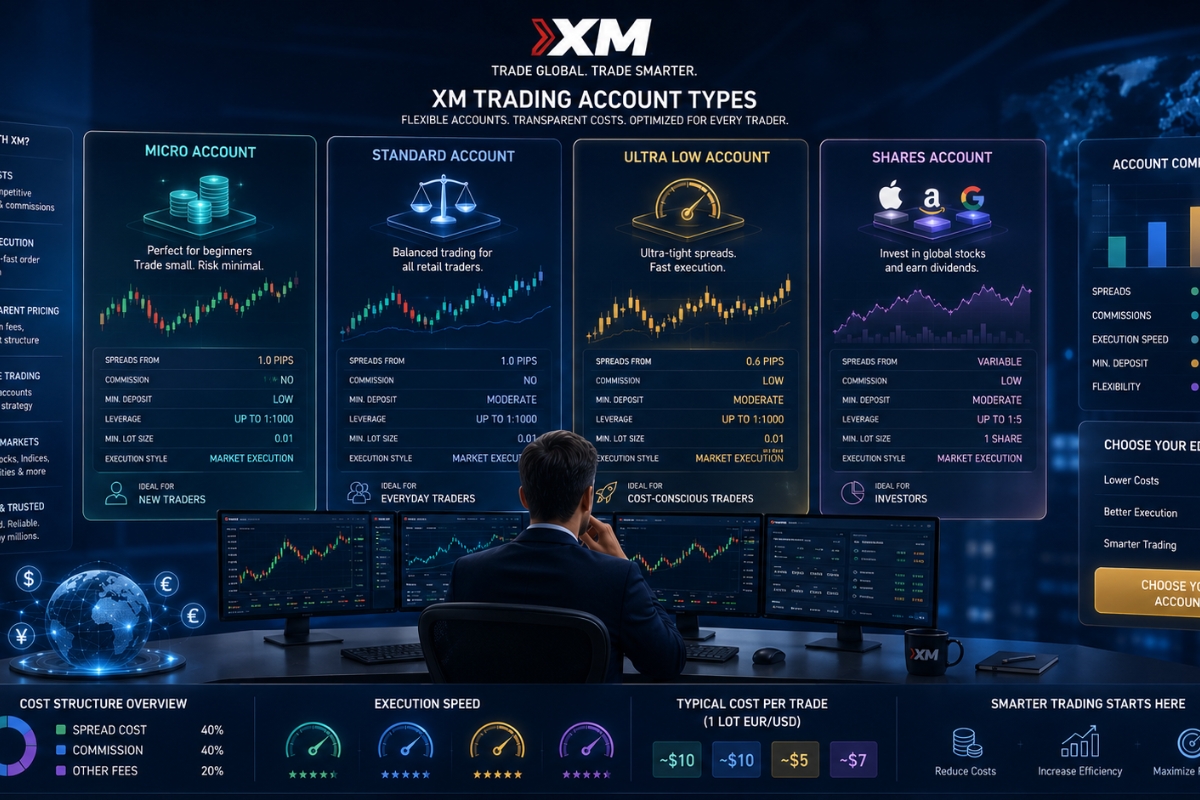
Each account type is governed by strict execution rules, ensuring no re-quotes and no hidden markups. Let’s compare the commission profiles of these accounts directly.
Which XM accounts include commission fees?
| Account Type | Commission Fee | Best For |
| Micro | $0$ (Commission-Free) | Beginners & Small Deposits |
| Standard | $0$ (Commission-Free) | Regular Traders |
| Ultra Low | $0$ (Commission-Free) | Scalpers & Day Traders |
| Shares | Varies by Exchange | Long-term Equity Investors |
| As shown, the majority of XM’s offerings are entirely commission-free, placing them at the top of the list for Forex-focused traders. |
Selecting the right account is the most significant “cost-saving” decision you will make.
How to choose the right XM commission account?
The decision should be based on your trading frequency and volume.
- If you trade multiple times a day: The Ultra Low Account is mandatory to minimize spread friction.
- If you trade very small volumes: The Micro Account allows you to manage costs in “cents” rather than dollars.
- If you are building a stock portfolio: The Shares Account is your only gateway to direct dividend-paying stocks.
- The experts at MBroker often suggest the Ultra Low account as the optimal balance for 90% of modern traders.
Once your account is set up, the final step is ensuring you are taking full advantage of XM’s transparency and optimization features.
Transparency and cost optimization XM commission
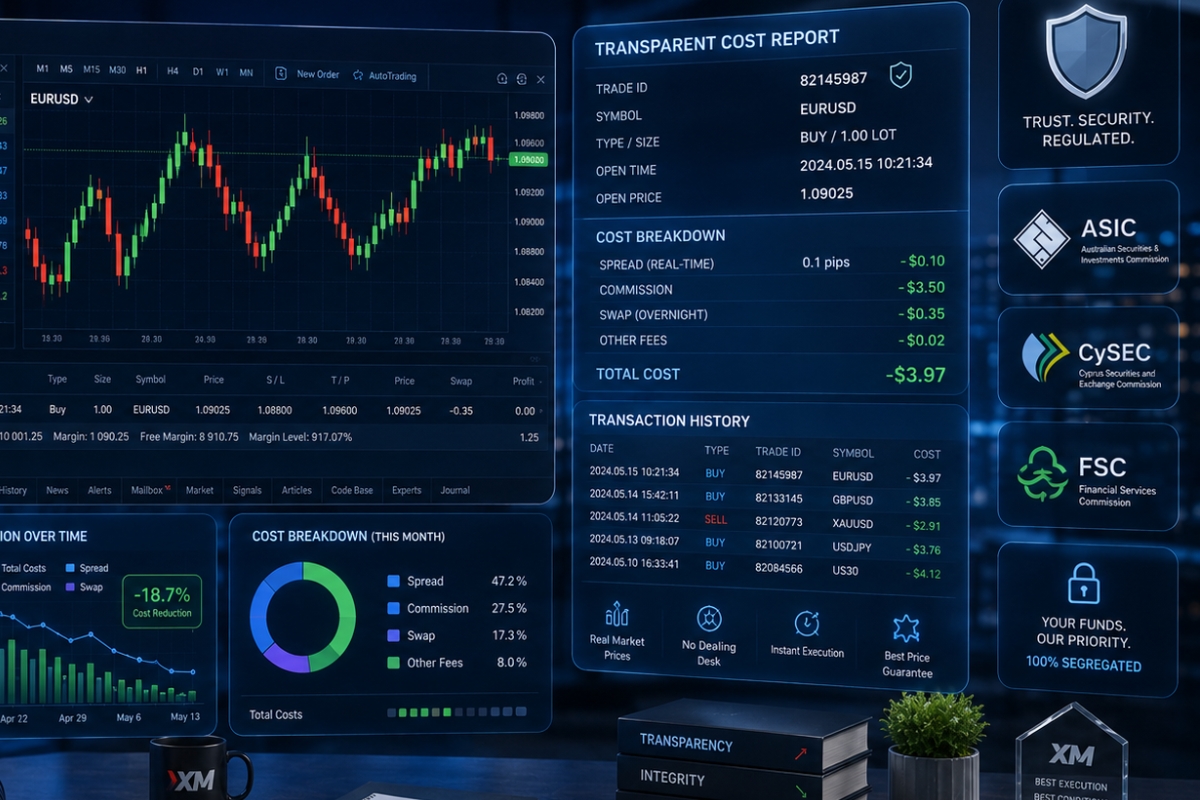
XM provides a complete “Cost Transparency Report” within the member area, and all fees are disclosed before a trade is even placed. There are no hidden fees for withdrawals, and most deposit methods are covered by the broker. This honesty builds a foundation of trust, allowing traders to focus on their charts rather than worrying about their account balance being “leaked” by hidden charges.
To truly excel, a trader must go beyond just accepting costs and start actively optimizing them.
How transparent is XM commission and pricing?
XM’s transparency is backed by its regulatory status (ASIC, CySEC, FSC). Every transaction is logged with a unique ticket ID, and the “Commission,” “Swap,” and “Spread” for every trade are clearly visible in the MT4/MT5 terminal’s history tab. This level of detail allows for a “Post-Trade Analysis” where you can see exactly how much you paid in fees over a month or year. This data is the lifeblood of professional traders who frequent MBroker.
Finally, let’s look at the actionable strategies to drive your trading costs down to the absolute minimum.
How to reduce trading cost on XM effectively?
To optimize your expenses on XM, implement these four strategies:
- Leverage the Loyalty Program: Earn XMP (XM Points) for every lot traded and redeem them for cash to offset your spreads.
- Monitor Swap Rates: Be mindful of “overnight fees.” If you are a day trader, close your positions before the market flip to avoid swaps.
- Use Limit Orders: While XM has no re-quotes, using limit orders can help you “capture” a specific price without the risk of minor slippage during high volatility.
- Consult MBroker: Regularly check the MBroker homepage for updates on XM promotions, rebates, and spread comparisons to ensure you are always on the most efficient account tier.
In the final analysis, the XM Commission and spread model is one of the most fair and transparent in the industry. By offering zero-commission Forex trading and highly competitive share commissions, XM removes financial barriers to the global markets. Whether you are a novice or a seasoned pro, understanding these costs is your path to a sustainable and profitable trading career. Always remember to check your costs, use the tools available, and stay informed through trusted sources like MBroker.

Neria Solven is a financial analyst specializing in XM trading fees and account types, known for her clear and practical insights. Email: [email protected]