
 Tiếng Việt
XM Guide
XM Guide provides a complete process to manage your account, including deposits, withdrawals, and account closure. This article outlines the key steps and rules to help you handle transactions safely and efficiently.
Depositing funds on XM requires choosing the right payment method and following the correct process to ensure fast and secure transactions. Understanding these steps helps you avoid delays and start trading without issues.
Withdrawing funds from XM depends on account verification, transaction rules, and selected payment methods. Following the correct conditions ensures your funds are processed smoothly and without unnecessary delays.
Closing your XM account involves completing key steps and ensuring all balances are handled properly. Managing this process correctly helps you deactivate your account securely and without complications.
Guide XM Account Rules

Before performing any transaction, it is essential to understand the basic rules that govern your XM account. These rules are designed to ensure security, compliance, and fair usage across all users.
Account Verification and Security Basics
Account verification is a mandatory step when using XM. This process, often referred to as KYC (Know Your Customer), ensures that your account is secure and compliant with financial regulations.
To verify your account, you typically need:
- A valid ID (passport, national ID, or driver’s license)
- Proof of address (utility bill or bank statement)
Verification not only protects your funds but also allows you to access all deposit and withdrawal features without restrictions.
Key Policies That Affect Transactions
XM applies several important policies that directly affect how you deposit and withdraw funds:
- Same method rule: Withdrawals must be processed using the same method as deposits
- No third-party payments: Transactions must match the account holder’s name
- Minimum limits: Each method may have its own minimum deposit or withdrawal amount
Understanding these rules helps you avoid delays and ensures a smooth transaction experience. Once your account is verified and you understand the policies, the next step is funding your account.
Deposit Funds on XM
Depositing funds is the first step to start trading. XM provides multiple payment options to make this process fast and convenient.
Supported Payment Methods
XM supports a variety of deposit methods, including:
- Bank transfer
- Credit/debit cards
- E-wallets (such as Skrill, Neteller)
- Local payment systems (depending on your region)
Each method has different processing times and conditions, so choosing the right one is important.
Deposit Process and Processing Time
The deposit process on XM is straightforward:
- Log in to your XM account
- Select the “Deposit” option
- Choose your preferred payment method
- Enter the amount and confirm the transaction
Most deposits are processed instantly, especially for cards and e-wallets. Bank transfers may take longer, typically 1–3 business days.
Once your account is funded, the next important step is knowing how to withdraw your funds correctly.
Withdraw Funds from XM
Withdrawing funds is just as important as depositing. A clear understanding of the process ensures that you can access your profits without unnecessary delays.
Withdrawal Conditions and Limits
Before requesting a withdrawal, consider the following:
- Withdrawals must follow the same method used for deposits
- Your account must be fully verified
- Minimum withdrawal amounts may apply
- Processing times vary depending on the method
These conditions are designed to maintain security and prevent fraud.
Common Issues During Withdrawal
Some traders experience delays due to avoidable mistakes. Common issues include:
- Incomplete account verification
- Using a different withdrawal method than the deposit
- Incorrect payment details
- Pending open positions affecting available balance
By checking these factors in advance, you can ensure a faster and smoother withdrawal process.
After managing deposits and withdrawals, you may eventually decide to close your account.
Close XM Account
Closing your XM account is a simple process, but it requires careful preparation to avoid losing access to funds or data.
When to Close Your Account
You may consider closing your account in the following situations:
- You no longer plan to trade
- You want to switch to another broker
- You are restructuring your trading strategy
Before closing your account, make sure all funds have been withdrawn and no trades are open.
How to Submit a Closure Request
To close your XM account:
- Log in to your account
- Contact XM support via email or live chat
- Request account closure
- Confirm your identity if required
Once the request is processed, your account will be deactivated. Keep in mind that reopening the same account may not always be possible.
After understanding the full lifecycle of account management, it’s helpful to explore more guides to improve your experience.
Learn More XM Guides for Account Management
Guide XM provides a complete framework for managing your trading account, from understanding rules to handling deposits, withdrawals, and account closure. By following the correct procedures and avoiding common mistakes, you can ensure secure transactions and a smooth trading experience. To get the most out of XM, continue exploring more guides to optimize your account management and trading efficiency.

Forex XM: Trader, Broker, Account, Crypto Trading Guide XM
Forex XM is a trading platform that allows users to trade currencies with real-time market...

Risk Management: Definition, Process, Theory, Trading Application
Risk management is the process of identifying, controlling, and minimizing potential losses in trading and...

Momentum Trading: Overview, Indicators, Strategy and Market Use
Momentum trading is a strategy that focuses on trading assets moving strongly in one direction,...

Point and Figure Charting: Trend Clarity, Patterns, Trading Methods
Point and Figure Charting is a price-action method that helps identify clear trends and key...

Kagi Chart: Structure, Trading Signals, How to Trade on the Platform
Kagi Chart is a price-action chart that ignores time and highlights trend changes based on...

Renko Charts: Price Action, Strategy, MT4 and Trading
Renko Charts are price-based charts that filter market noise by forming bricks only when price...
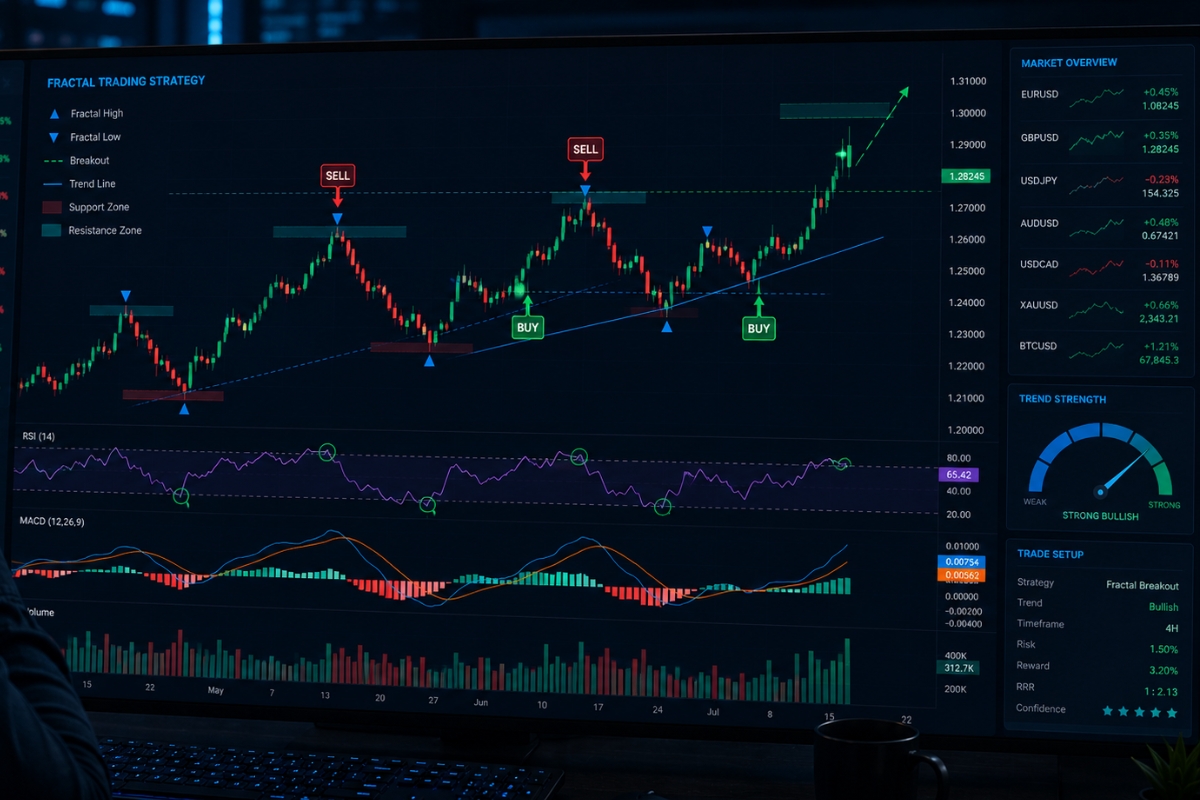
Fractal Trading Strategy: Meaning, Indicators, Trading Signals
Fractal trading strategy is a method that uses repeating price patterns to identify market turning...

Rounding Bottom Pattern Chart: Identification, Accumulation, Trading
Rounding Bottom Pattern Chart is a bullish reversal pattern that forms a U-shaped curve after...

Bar Charts: Definition, Structure, Reading, Trading Methods
Bar charts are price charts that display open, high, low, and close (OHLC) in a...
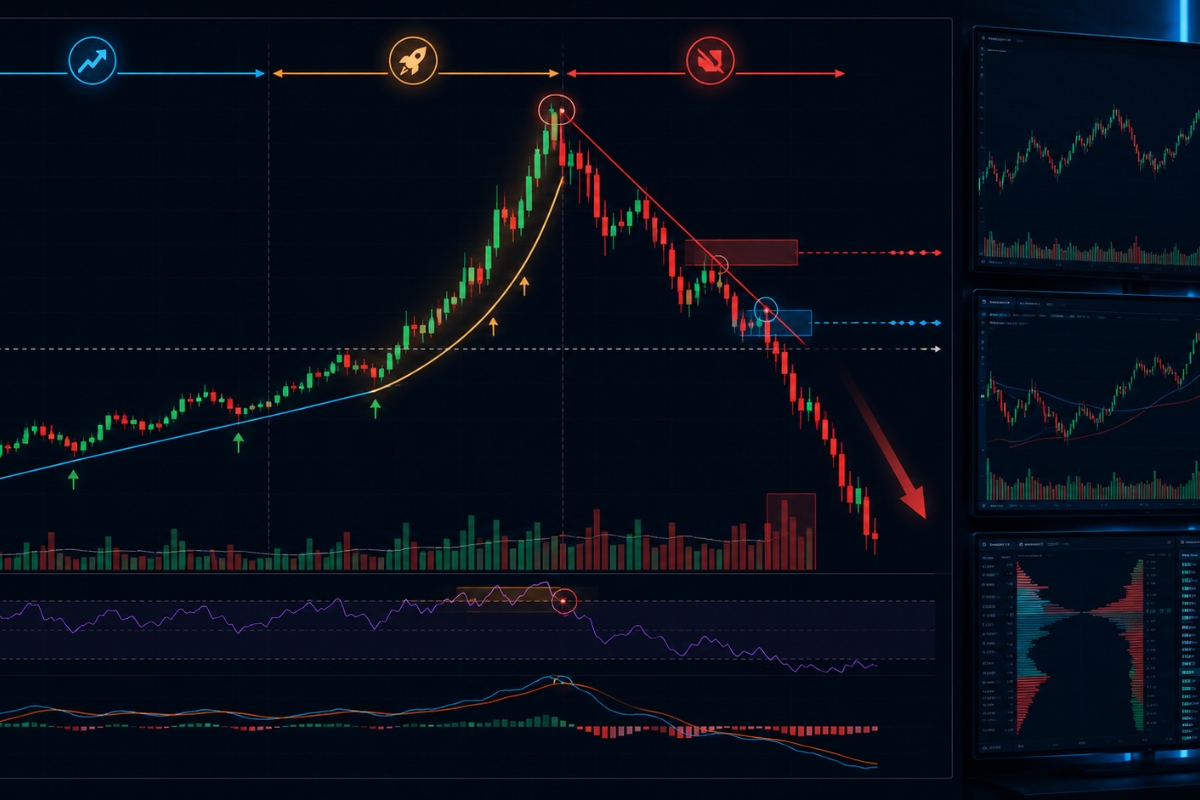
Bump and Run Reversal Pattern: Phases, Breakdown, Trade Setup
Bump and run reversal pattern is a three-phase reversal structure signaling trend exhaustion after a...