
 Tiếng Việt

XM Commodities trading allows access to Gold, Oil, Metals, and Energy markets with spreads from ~1.0 pip and flexible leverage.
Additionally, Gold trading on XM (XAUUSD) offers high liquidity and strong volatility, making it one of the most traded assets with real-time pricing and competitive conditions.
Meanwhile, Oil trading on XM includes major instruments like WTI and Brent, providing opportunities to profit from global energy price movements with no fixed commissions.
Furthermore, XM Metals trading covers assets like Silver and Platinum, helping traders hedge risk and diversify beyond currencies and indices.
Finally, XM Energy trading combines low costs, leverage up to 1:500, and fast execution, delivering key benefits such as portfolio diversification, cost efficiency, and flexible trading strategies.
Overall, XM provides a complete ecosystem for trading commodities, metals, energy, and indices with competitive conditions. Explore more in the XM Products category to find the right instruments for your strategy.
What is XM gold trading and how does it work?
XM gold trading operates as a Contract for Difference (CFD), allowing traders to speculate on the price movements of the world’s most precious metal without possessing physical bars. XM offers Gold (XAUUSD) with tight spreads, high-speed execution, and zero commissions on standard accounts. Because Gold is priced in the U.S. Dollars serve as a primary hedge against inflation and currency devaluation, making it a cornerstone of the XM commodities portfolio.

To succeed in this market, it is essential to understand the technical process of execution and the fundamental drivers behind Gold’s price.
How do you trade gold on XM?
Trading Gold on XM is a streamlined process integrated directly into the MT4 and MT5 platforms.
- Symbol Selection: Traders locate “GOLD” or “XAUUSD” in the Market Watch window.
- Execution: You can place Market Orders for instant entry or Pending Orders (Limit/Stop) to enter at specific price levels.
- Contract Size: XM offers flexible sizing, where 1 lot equals 100 ounces on standard accounts, but traders can trade as little as 0.01 lots.
Why is gold popular in XM commodities trading?
Gold remains the most popular commodity at XM due to its status as a “Safe Haven” asset during times of geopolitical or economic uncertainty.
- Liquidity: High trading volumes ensure that buy and sell orders are filled instantly with minimal slippage.
- Volatility: Gold frequently moves 1-2% in a single day, providing ample opportunities for day traders to capture profits.
- Low Cost: With XM’s Ultra-Low accounts, the cost of trading Gold is significantly lower than traditional bullion investment.
While Gold provides stability, the energy sector offers a different kind of dynamic opportunity, specifically through the global oil market.
What is XM oil trading and why is it important?
XM oil trading involves the exchange of the world’s most heavily traded energy resource through two primary benchmarks: WTI (West Texas Intermediate) and Brent Crude. Oil is critical to the global economy as it powers transportation and industry, meaning its price fluctuations directly impact global inflation and GDP. At XM, oil is traded as a “Future CFD,” which means traders can engage with the market using high leverage and without the expiry complexities found in traditional futures exchanges.
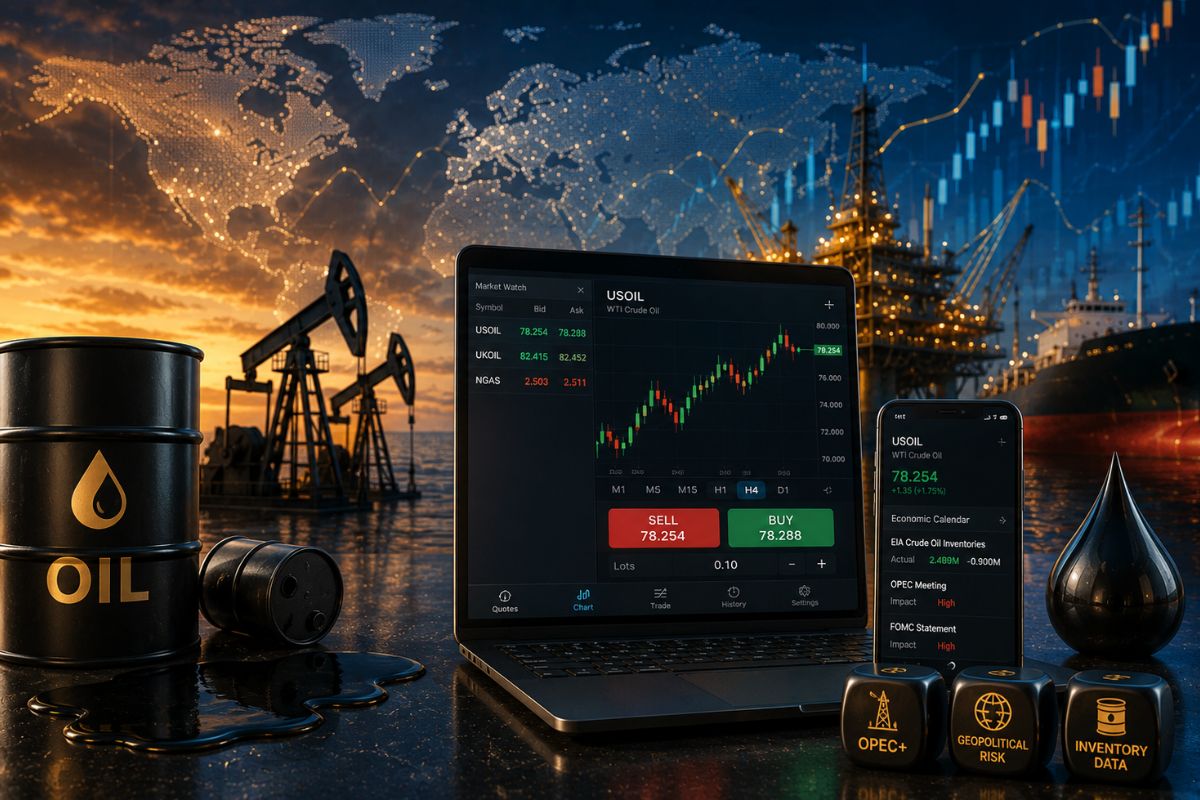
Understanding the mechanics of the oil market is vital for any trader looking to diversify their energy portfolio.
How does XM oil trading work?
Oil trading at XM is performed via CFDs on Oil Futures, which track the price of the underlying exchange-traded contracts.
- No Physical Delivery: You are only trading the price difference, meaning you never take delivery of actual oil barrels.
- Expiration Dates: Since these are based on futures, each contract has an expiration date; however, XM provides a clear calendar to help traders roll over their positions.
- Leverage: Traders can control large amounts of oil (measured in barrels) with a small margin deposit, typically starting from $5.
What affects oil prices on XM?
Oil prices are notoriously volatile and are influenced by a specific set of global fundamental factors:
- OPEC+ Decisions: Production cuts or increases by major oil-producing nations.
- Geopolitical Conflict: Supply disruptions in the Middle East or Eastern Europe.
- Inventory Data: Weekly reports like the EIA (Energy Information Administration) Crude Oil Inventories often cause spikes in volatility.
Moving from liquid energies, we encounter the industrial side of the market: the broad category of base and precious metals.
What is XM metals trading and what instruments are available?
XM metals trading extends beyond just Gold, encompassing a variety of precious and industrial metals such as Silver, Palladium, and Platinum. These instruments are highly valued for their dual role as investment assets and essential components in the manufacturing and technology sectors (e.g., Silver in solar panels). XM provides access to these metals with low margin requirements and the same high-speed MT5 execution environment used for Forex.
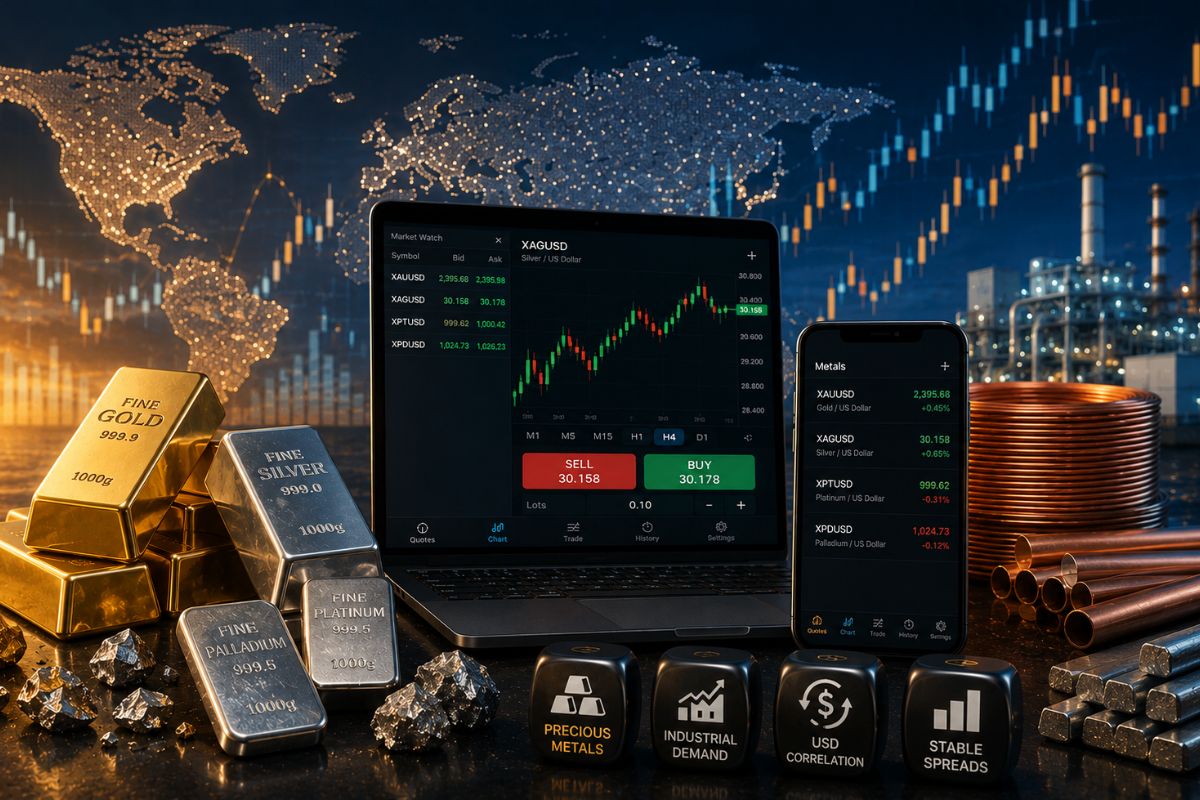
To build a balanced metals portfolio, traders must distinguish between the various available instruments and their unique market behaviors.
What metals can you trade on XM?
XM provides a comprehensive list of metals that cater to different risk appetites and industrial outlooks.
- Silver (XAGUSD): Often follows Gold but with higher percentage volatility.
- Platinum (XPTUSD): Primarily driven by the automotive industry and industrial demand.
- Palladium (XPDUSD): A rare metal used in catalytic converters, known for significant price swings.
How are metals different from other commodities?
Metals differ from agricultural or energy commodities because they are indestructible and can be stored indefinitely as a store of value.
- Correlation: Precious metals often have an inverse correlation with the U.S. Dollar.
- Industrial Linkage: Unlike Gold, metals like Silver and Platinum are heavily influenced by manufacturing data (PMI reports).
- Spread Stability: Metals at XM generally maintain consistent spreads even during off-peak hours compared to soft commodities.
Beyond the “hard” metals, the energy sector includes vital gaseous commodities that power the modern world.
What are XM energy commodities and how are they traded?
XM energy commodities primarily include Natural Gas alongside the traditional Crude Oil benchmarks. Energy trading is a high-stakes environment where prices are influenced by seasonal weather patterns, storage levels, and infrastructure developments. On the XM platform, these products are traded with zero commissions and competitive spreads, allowing retail traders to participate in a market traditionally dominated by large utility companies.
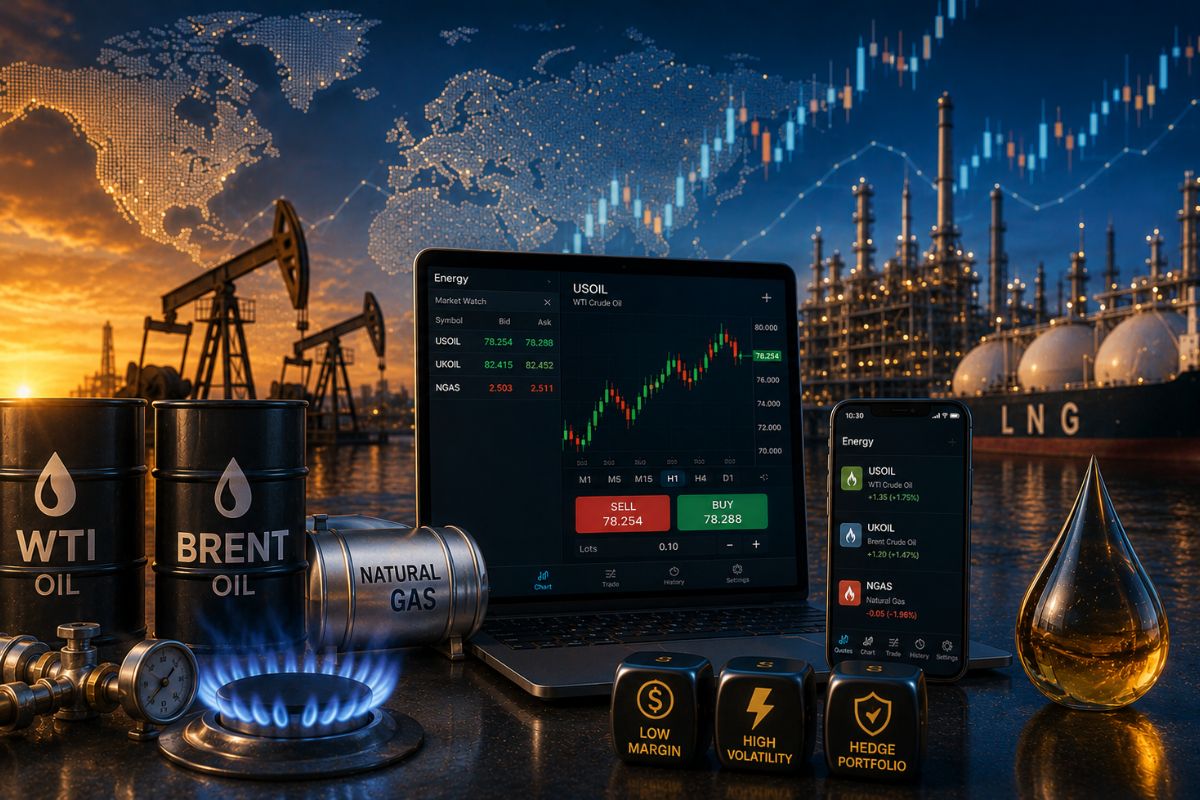
Let’s look at the specific energy products and the strategic reasons behind trading them.
What energy products are available on XM?
The energy desk at XM focuses on the most liquid and volatile products to ensure traders always have an exit strategy.
- WTI Oil: The American benchmark for crude oil.
- Brent Oil: The global benchmark, primarily sourced from the North Sea.
- Natural Gas (NGAS): A highly seasonal commodity used for heating and electricity generation.
Why trade energy commodities on XM?
Traders choose XM for energy because of the superior trading environment that balances cost and performance.
- Low Margin: You can open an energy position with a fraction of the full contract value.
- Advanced Tools: Use the XM mobile app or desktop platform to track energy news in real-time.
- Hedging: Energy stocks often move in tandem with oil prices; trading energy CFDs allows you to hedge your stock portfolio.
While the technical details of each instrument are important, the overarching benefits of the XM brand are what truly empower the trader.
What are the benefits of XM commodities trading?
The benefits of XM commodities trading include access to institutional-level liquidity, a 100% execution rate, and a transparent fee structure with no hidden costs. XM stands out by offering educational resources, daily market research, and a multi-regulated environment that ensures client funds are held in segregated accounts.
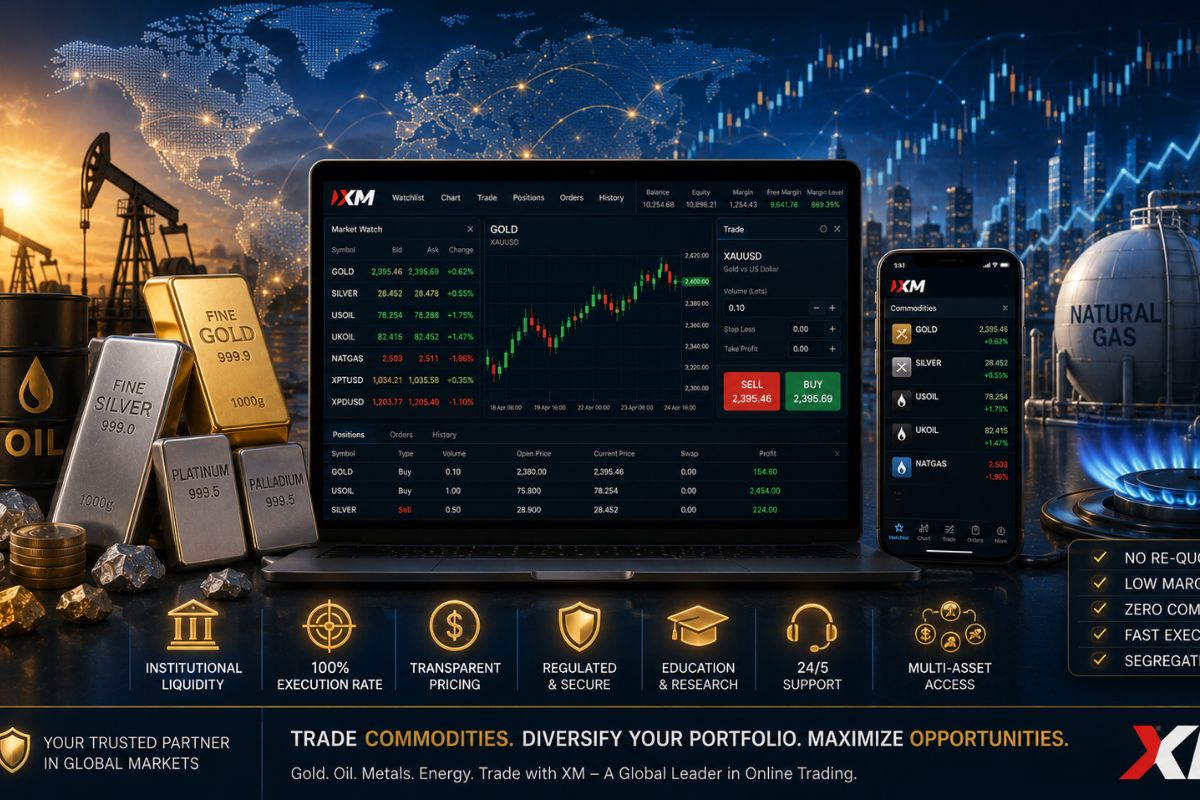
This combination of safety and performance makes it an ideal choice for traders looking to move beyond simple currency pairs.
However, choosing a broker is only half the battle; one must also weigh the internal advantages against market risks.
What advantages does XM offer for commodities trading?
XM provides several mechanical and service-based advantages that give traders a competitive edge.
- No Re-quotes: The price you see is the price you get, even during high-market volatility.
- Educational Support: Beginners can access live webinars and tutorials on how to analyze commodity cycles.
- Multi-Asset Integration: You can trade Gold, Oil, and EUR/USD all from a single account balance, as seen on the MBroker homepage.
What should traders consider before trading commodities?
Before diving into the commodities market, it is crucial to understand the inherent risks involved in these high-volatility assets.
- Leverage Risk: High leverage can lead to rapid losses if the market moves against you.
- Fundamental Knowledge: Commodities are more “fundamental-heavy” than Forex; you must track weather, politics, and supply chains.
- Account Selection: Ensure you choose the right account type (e.g., Ultra-Low) to match your trading frequency and capital.
In conclusion, XM Commodities Trading offers a powerful and flexible platform for anyone looking to invest in gold, oil, and other essential materials. By combining world-class technology with fair trading conditions, XM enables traders to diversify their portfolios and capture opportunities in some of the world’s most exciting markets.
For the most up-to-date analysis and professional guidance on setting up your XM account, always refer to MBroker, your trusted source for market insights and brokerage excellence. Start your commodities journey today with a partner that prioritizes your success.

Sylas Trenven is a forex strategist who helps traders master risk and timing. His work focuses on behavior-driven market entries and portfolio optimization for XM users looking to trade with precision and discipline. Email: [email protected]