
 Tiếng Việt
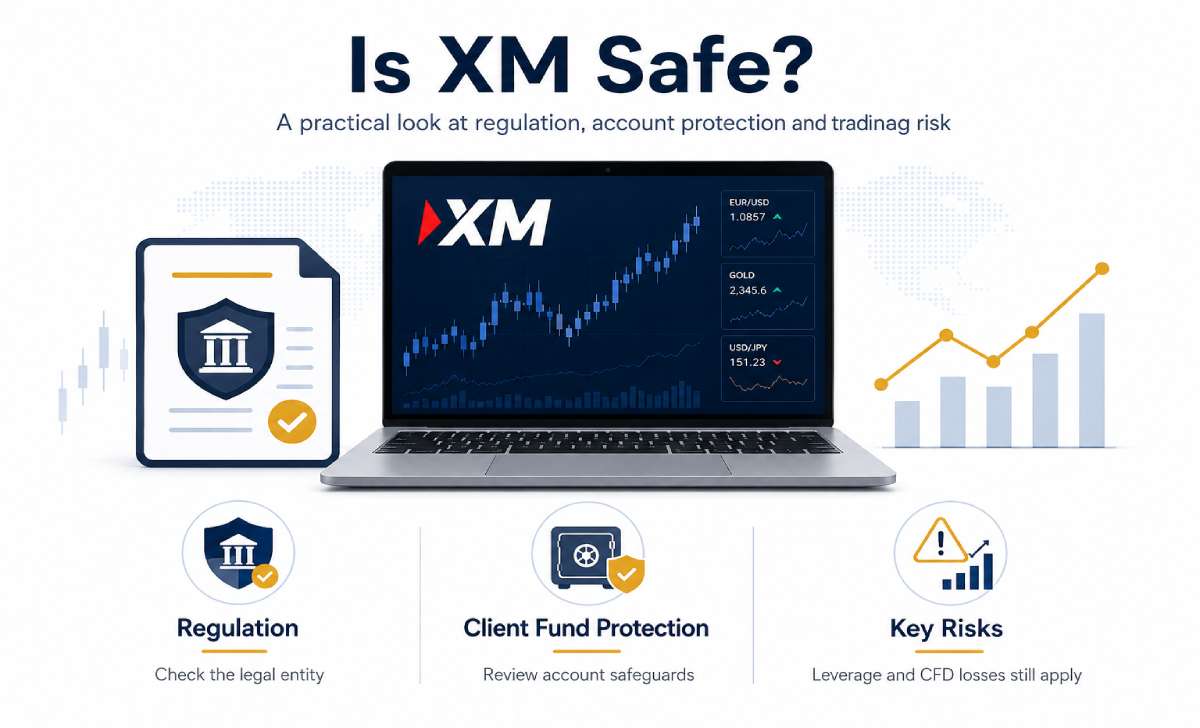
XM is a regulated broker brand, but its safety cannot be assessed with an unconditional “yes.” XM Global Limited currently states that it is regulated by the Financial Services Commission of Belize under licence number 8557558, while CySEC lists Trading Point of Financial Instruments Ltd under licence 120/10. The protection applicable to a trader depends on which company holds the account.
Client protection may include segregated funds and negative balance protection. However, these safeguards are governed by the Client Agreement of the relevant XM entity and should not be treated as insurance against trading losses or every possible financial dispute.
Regulation does not remove the risks of leveraged Forex and CFD trading. XM’s risk disclosure explains that leverage can amplify losses, market conditions can prevent execution at the requested price, and traders may lose all the capital invested in their accounts.
Is XM regulated and safe from a legal perspective?
XM operates through identifiable regulated companies, but a licence belonging to one entity does not automatically protect every XM customer. Traders must identify the company named in their registration documents and verify that company directly with its regulator.
XM is a brand used across different legal entities and jurisdictions. For example, the international XM website identifies XM Global Limited as an FSC Belize-regulated company, whereas the CySEC register records Trading Point of Financial Instruments Ltd as a Cyprus Investment Firm licensed since August 2010.
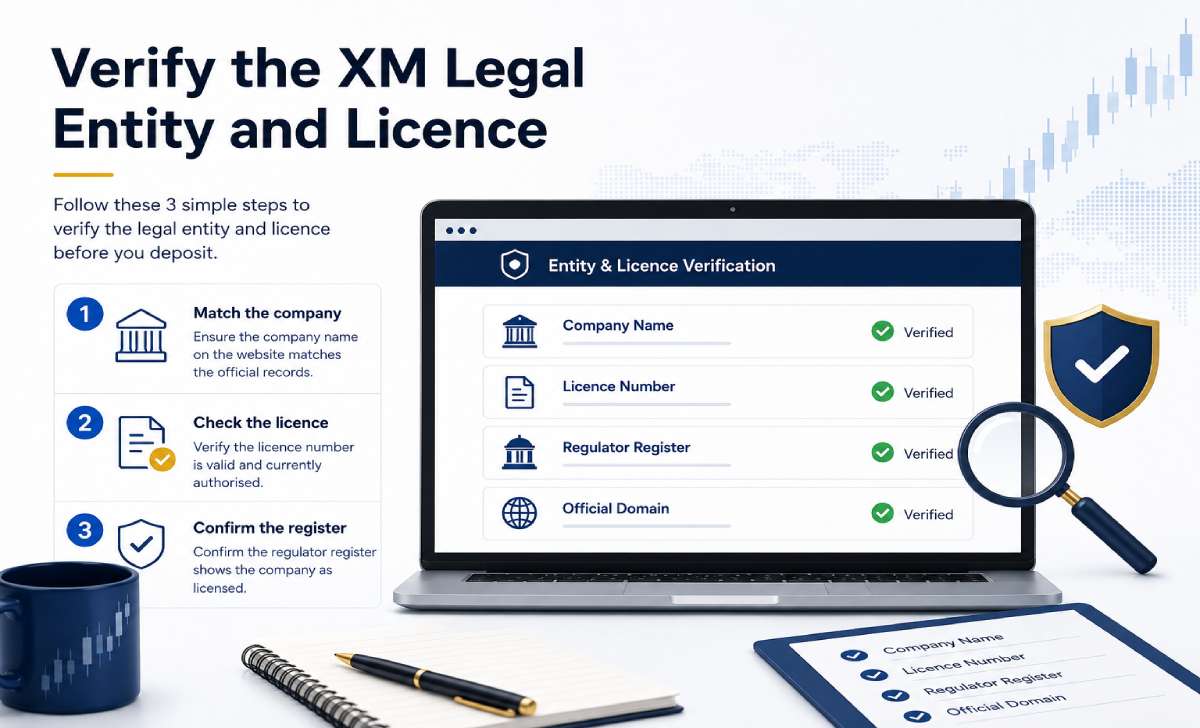
The image below shows the three details that must match: the company name, licence number and regulatory register.
Which XM entity holds your account?
The controlling entity is the company named in your Client Agreement, account-registration pages and website footer. Your country of residence and the services available in that country may determine which entity is offered to you.
This distinction matters because regulators can impose different requirements concerning leverage, complaints, compensation arrangements and client categorisation. In addition, XM’s global website states that its services are unavailable in certain restricted or sanctioned regions and that users remain responsible for checking local legal requirements.
Before relying on a licence claim, use the following checks to confirm what actually applies to the account.
| Safety check | What must match | Where to check | Why it matters |
| Legal entity | Full registered company name | Registration page and Client Agreement | Identifies the company responsible for the account |
| Licence number | Exact number, without missing digits | Website footer and regulator register | Helps detect inaccurate or copied licence claims |
| Regulatory status | Active authorised company | Regulator’s official database | Confirms that the record exists independently |
| Approved domain | Website domain used for registration | Regulator’s approved-domain list | Reduces the risk of using an imitation website |
| Client Agreement | Entity name and governing law | XM Legal Documents or Members Area | Defines the contractual protections and obligations |
| Regional eligibility | Country and client restrictions | Registration page and legal notice | Determines whether services may legally be provided |
How can you verify an XM licence?
Verification should be completed on the regulator’s own website rather than through a broker-review page or promotional badge.
- Find the complete company name in the website footer.
- Record the licence number shown beside that company.
- Search the company in the relevant regulator’s register.
- Compare the registered and approved domains with the website being used.
- Confirm that the same company appears in the Client Agreement presented during registration.
For example, CySEC’s database lists Trading Point of Financial Instruments Ltd with licence 120/10, while its approved-domain register includes xm.com for that company.
Once the legal entity has been confirmed, the next question is what its contractual safeguards actually cover.
How does XM protect client funds and trading accounts?
XM’s published terms describe segregated client money and negative balance protection, although neither measure makes a trading account free from loss. The precise provisions and exceptions must be checked in the agreement belonging to the assigned entity.
For XM Global Limited, the Client Agreement states that client money is held with an approved bank and separated from the company’s funds. It also allows client funds to be pooled with money belonging to other clients in an omnibus account.
The following visual distinguishes the main safeguards instead of treating them as one general “fund protection” promise.
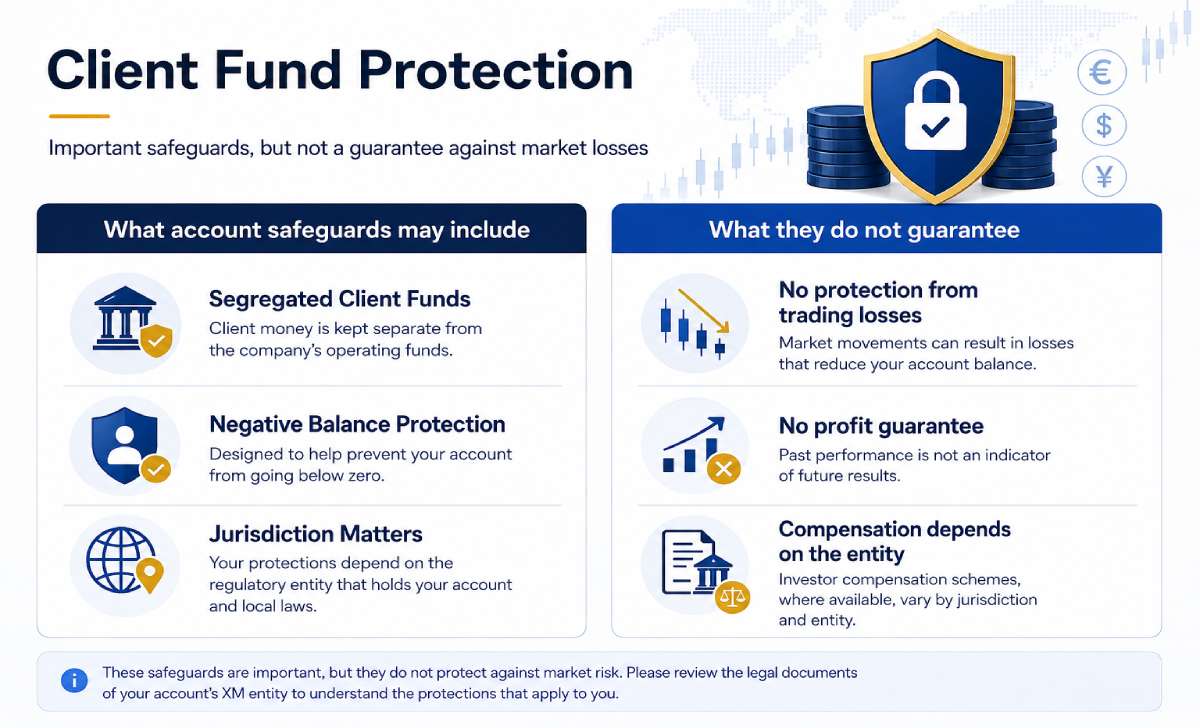
The table explains what each measure may do and, more importantly, what it does not guarantee.
| Protection or control | What it may do | What it does not do | Entity-dependent? |
| Segregated client money | Separates client balances from operational company funds | Guarantee full recovery after every bank or company failure | Yes |
| Negative balance protection | Limits qualifying CFD liability to the funds in an account | Prevent the account balance from being lost through trading | Yes |
| Margin and stop-out controls | Automatically close positions when margin becomes insufficient | Guarantee closure at the exact expected price | Yes |
| Investor compensation scheme | Cover certain eligible claims where a statutory scheme applies | Reimburse ordinary market or trading losses | Yes |
| Payment and KYC controls | Verify identity and ownership of payment methods | Ensure every withdrawal is immediate or exempt from review | Yes |
Are XM client funds held separately?
The XM Global agreement states that client money is segregated from company funds. However, XM’s risk documentation also warns that funds held at a client bank may not always be recovered in full if that bank becomes insolvent or otherwise fails.
Therefore, segregation is an important operational safeguard, but it should not be described as a deposit guarantee.
Can an XM account go into a negative balance?
XM Global’s terms describe negative balance protection on a per-account basis, aiming to limit CFD losses and related costs to the funds held in that account. The same clause also contains exceptions involving suspected arbitrage, abusive activity or misuse of the protection.
Negative balance protection limits additional liability under applicable conditions. It does not prevent a trader from losing the entire positive balance.
Does XM provide investor compensation?
Compensation depends on the legal entity, client classification and applicable jurisdiction. CySEC explains that its Investor Compensation Fund protects eligible clients of Cyprus Investment Firms, but traders should not assume that a Cypriot arrangement applies to an account contracted with XM Global Limited in Belize.
Payment controls also matter. For example, XM Global’s agreement requires card users to be the legitimate owners of the cards used and permits funds to be returned through the same payment method in specified circumstances.
Risk warning: Forex and CFDs are leveraged products that can cause rapid losses. Segregated funds and negative balance protection do not guarantee profits, prevent market losses or ensure that every position will close at the requested price.
These safeguards address certain broker and account risks; they do not remove the remaining market, jurisdiction and verification risks.
What risks should you check before using XM?
The main risks are leveraged trading losses, jurisdiction-specific protection, execution during volatile markets, payment verification and the possibility of accessing an unauthorised website. Each should be checked independently before deciding whether XM is suitable for further consideration.
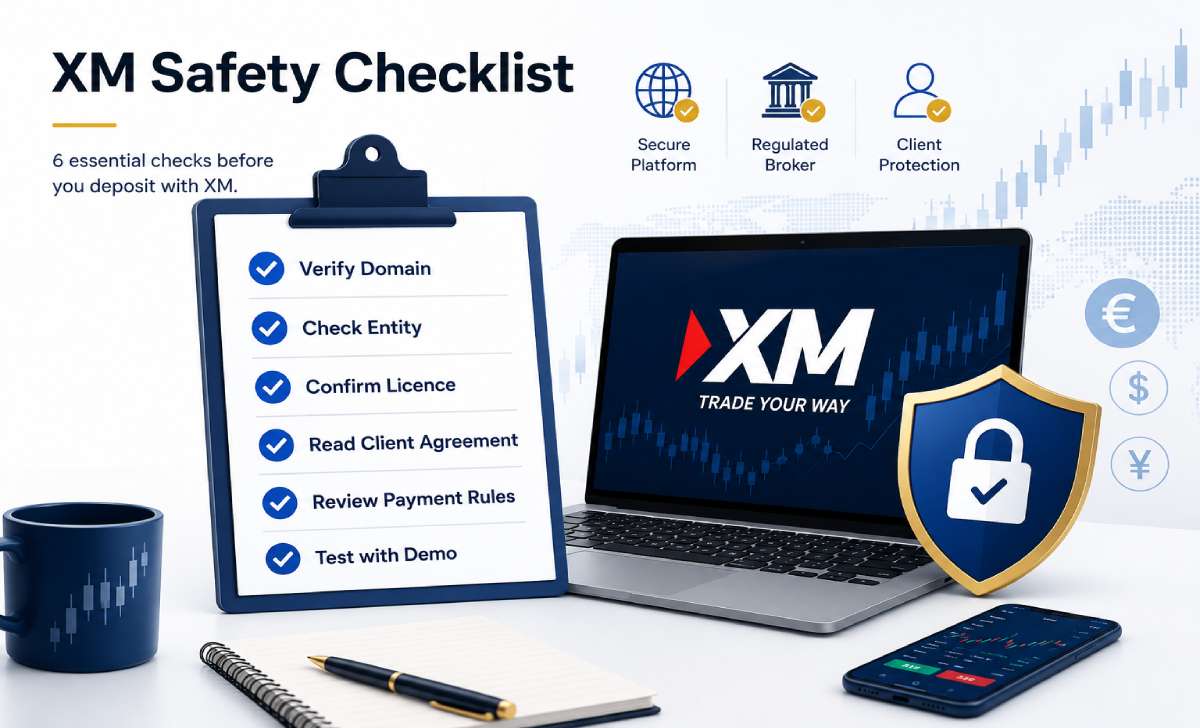
The following checklist illustrates what a trader should verify before providing personal documents or funding an account.
Does XM regulation remove CFD trading risk?
No. A regulator oversees the broker’s conduct, but it does not guarantee the outcome of a trade.
XM’s risk disclosure states that CFDs use leverage, so a relatively small adverse price movement can have a disproportionate effect on an account. It also warns that stop-loss orders may execute at a less favourable price during fast-moving markets and should not be considered a guaranteed loss limit.
What can XM complaints actually tell you?
Customer complaints can reveal recurring questions about verification, payments, account restrictions or customer support, but individual reports do not independently prove that a broker is safe or fraudulent.
A complaint should be assessed against the Client Agreement, transaction records and the company’s formal complaint procedure. In contrast, legal status should always be verified through the regulator rather than inferred from user ratings.
For broader context, Mbroker.net’s independent XM resources cover accounts, platforms, costs and risks without acting as XM or processing client funds.
What should you verify before depositing?
A safe review process checks the legal relationship and operational conditions before any funding decision.
- Use the domain listed by the relevant regulator.
- Match the company name and licence number with the regulator’s register.
- Read the Client Agreement and Risk Disclosure for the assigned entity.
- Confirm that XM can legally provide services in your country.
- Review identity, payment-ownership and withdrawal-document requirements.
- Check the available complaint route and applicable governing law.
- Test the platform with virtual funds before considering a real account.
A demo does not reproduce every live-trading condition, but it allows users to examine platform functions without risking real capital. Mbroker’s XM demo account guide explains the basic distinction between virtual and real accounts.
Overall, XM has regulated entities and published client-protection measures that can be independently checked. It should nevertheless be described as conditionally regulated and protected rather than universally safe. The deciding factors are the company holding the account, the jurisdiction’s protections, the applicable agreement and whether the trader understands the possibility of losing all capital committed to leveraged Forex or CFD positions.

Thoren Vextal is Mbroker’s XM Reviews and How-To Guides Editor, covering broker reviews, regulation, comparisons and practical account guides.Email: [email protected]