
 Tiếng Việt

Forex market works through a decentralized global network where currencies are traded 24/5 based on supply and demand, with major participants including banks, institutions, and retail traders.
Forex price fluctuations are driven by economic data, interest rates, and market sentiment, causing currency pairs to move continuously in response to global financial events.
Additionally, forex trading on XM allows traders to access real-time price movements with instant execution, enabling them to apply strategies based on market fluctuations effectively.
Moreover, market liquidity determines how easily trades are executed and directly impacts price stability, with the highest liquidity occurring during major trading sessions like London and New York.
Therefore, the best time to trade forex is during high-liquidity sessions when spreads are lowest and price movements are more predictable, helping traders optimize entry and exit points.
The Forex market operates based on global supply and demand, where prices fluctuate continuously every second. To trade effectively, you need to clearly understand how Forex market works, what drives price movements, and how to apply this knowledge in real trading. For a deeper understanding, explore more in the XM Guide section to learn how to trade Forex effectively on XM.
How Forex market works in real trading conditions?
The forex market works in real trading conditions as a decentralized, Over-the-Counter (OTC) network where global participants trade currencies directly with one another without a centralized exchange floor.

Statistically, it stands as the largest financial market in the world, generating an immense daily trading volume exceeding $7.5 trillion. Because there is no single physical location, transactions are processed electronically via global interbank computer networks, running continuously across different international time zones to provide constant trading access to participants worldwide.
Who participates in the forex market?
The foreign exchange ecosystem is heavily dominated by a diverse tier of institutional and retail market participants:
- Central Banks: Institutions like the Federal Reserve (Fed) or the European Central Bank (ECB) that influence currency values via interest rate adjustments.
- Commercial and Investment Banks: Elite entities (e.g., JPMorgan, Citibank) that manage the bulk of daily interbank transaction volume.
- Multinational Corporations: Businesses that swap large sums of currency to fund global supply chains and cross-border mergers.
- Retail Traders: Individual investors who execute micro-allocations via professional digital broker interfaces.
While these participants generate non-stop order flow, the structural rotation of global banking hubs is what keeps the market open indefinitely.
How does forex market operate 24 hours a day?
The forex market operates 24 hours a day, 5 days a week, by passing the operational torch across four primary geographic financial centers: Sydney, Tokyo, London, and New York. As the banking day concludes in Tokyo, the European financial hubs immediately open their order books, followed seamlessly by the North American session. This continuous loop begins every Sunday at 22:00 GMT and concludes on Friday at 22:00 GMT, ensuring constant liquidity for global participants.
Recognizing how these sessions interact leads directly to analyzing the localized supply and demand imbalances that cause exchange rates to shift.
Forex price fluctuations and what drives market movement?
Forex price fluctuations are driven entirely by the shifting balance of supply and demand for any given currency pair on the international market.
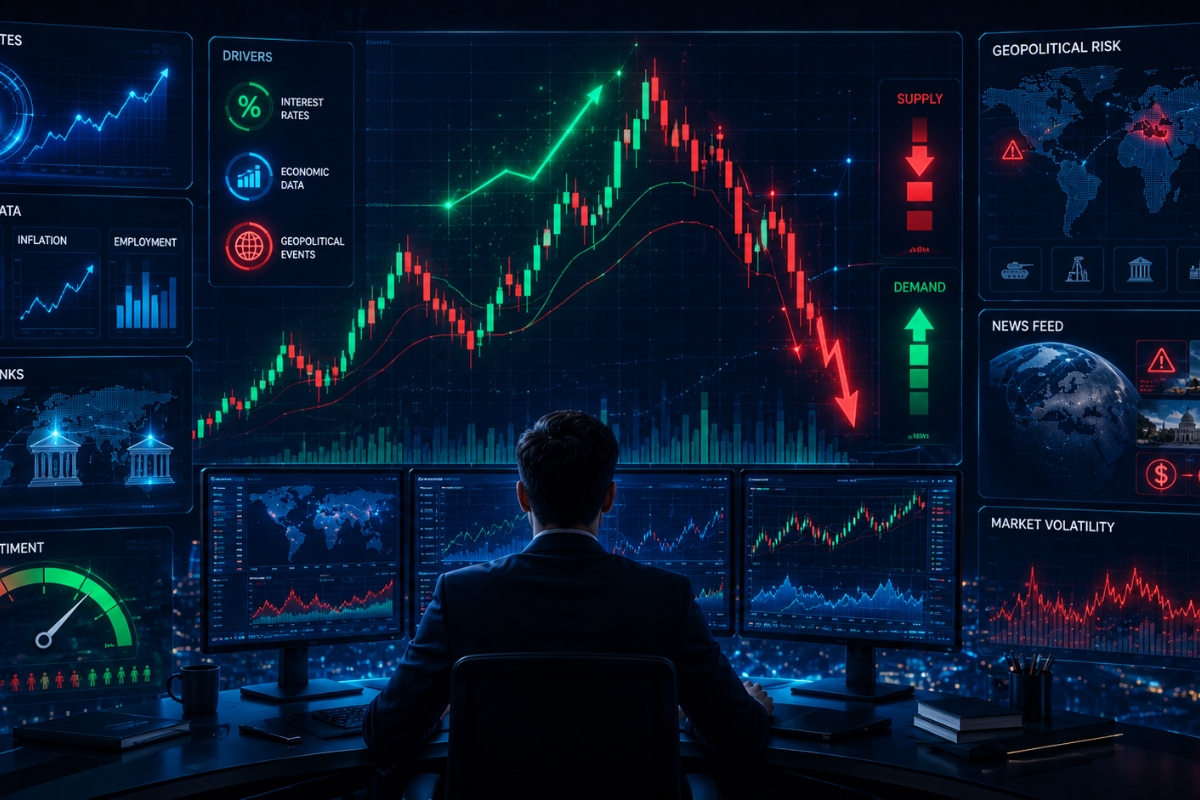
Technically, when institutional buy orders outweigh sell orders, a currency’s value rises, whereas a surplus of selling pressure causes the exchange rate to fall. These rapid price fluctuations occur in fractions of a second, measured in Pips (Percentage in Point), and are influenced by real-time interest rate differentials, global GDP data, employment reports, and shifting geopolitical sentiments.
What causes forex price fluctuations?
Currency exchange rates are constantly modified by three core fundamental and macroeconomic variables:
- Interest Rate Policies: Currencies belonging to nations with higher relative interest rates attract foreign capital, driving localized demand and price appreciation.
- Economic Indicators: High-impact data releases, such as inflation metrics (CPI) and employment figures (NFP), cause sharp, immediate adjustments in asset valuations.
- Geopolitical Risk: Wars, election results, and sudden trade policy alterations cause investors to rapidly flee to safe-haven assets like the USD or CHF.
Beyond static macro numbers, the immediate presentation of this information to the public alters how retail brokers behave.
How does news trading impact price movement on XM?
High-impact news trading triggers intense volatility expansions on the XM platform, causing typical bid-ask spreads to temporarily widen as liquidity providers adjust to sudden inventory shocks. During events like an interest rate announcement, incoming order volume can surge by over 300% within seconds, resulting in rapid candlestick expansions and technical breakouts. Traders checking structural analytics on the MBroker are advised to monitor the daily economic calendar closely, as trading during these initial news spikes requires advanced execution precision.
Understanding how to navigate these sudden price expansions prepares you to transition from abstract market theory into live platform execution.
Forex trading on XM and how traders apply market knowledge?
Forex trading on XM allows retail investors to actively apply their knowledge of price fluctuations by using derivative contracts to go long or short on global currencies.
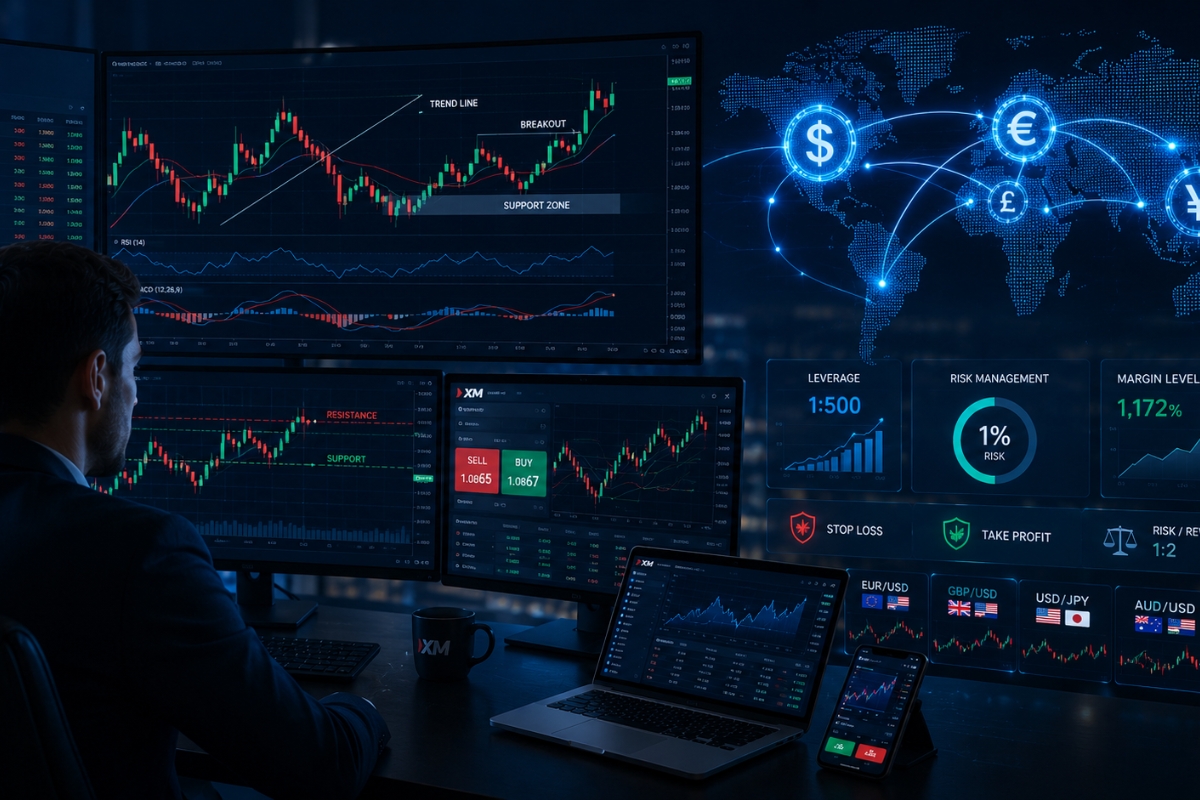
The platform enables users to trade with flexible leverage models up to 1000:1, meaning you can control a large position size using a relatively small amount of margin capital. By combining high-speed execution protocols with an advanced multi-asset terminal, traders can successfully capitalize on micro-price movements across major, minor, and exotic currency pairs.
How to start trading forex on XM platform?
Launching your live trading environment on XM is a straightforward, highly secure onboarding process:
- Account Registration: Sign up on the official XM portal and select your preferred execution framework (such as the Standard or Ultra Low account).
- Identity Verification: Submit standard KYC compliance documentation, including a government ID and proof of residence, to secure your profile.
- Capital Funding: Deposit your trading capital using local bank transfers, digital wallets, or international payment processors.
- Terminal Installation: Download the MetaTrader 4 (MT4) or MetaTrader 5 (MT5) platform to access real-time institutional exchange feeds.
Once your platform is active, you must configure a systematic methodology to exploit daily chart movements.
How to use price fluctuations for trading strategies?
Traders convert chart volatility into financial profit by implementing strict mechanical frameworks:
- Trend Following: Identifying long-term price channels and executing buy orders at structural support levels within an established bull market.
- Breakout Trading: Positioning entry orders slightly outside clear horizontal ranges to capture massive momentum when a key support or resistance line cracks.
- Risk Mitigation: Enforcing a maximum 1% to 2% risk per trade allocation and utilizing automated stop-loss orders to defend account equity against adverse market swings.
While strategies rely heavily on technical patterns, long-term trade success is ultimately governed by the underlying volume depth of the market.
Market liquidity and its role in forex price movement
Market liquidity refers to the absolute volume of active buy and sell orders available at any given price point within the global interbank inventory.
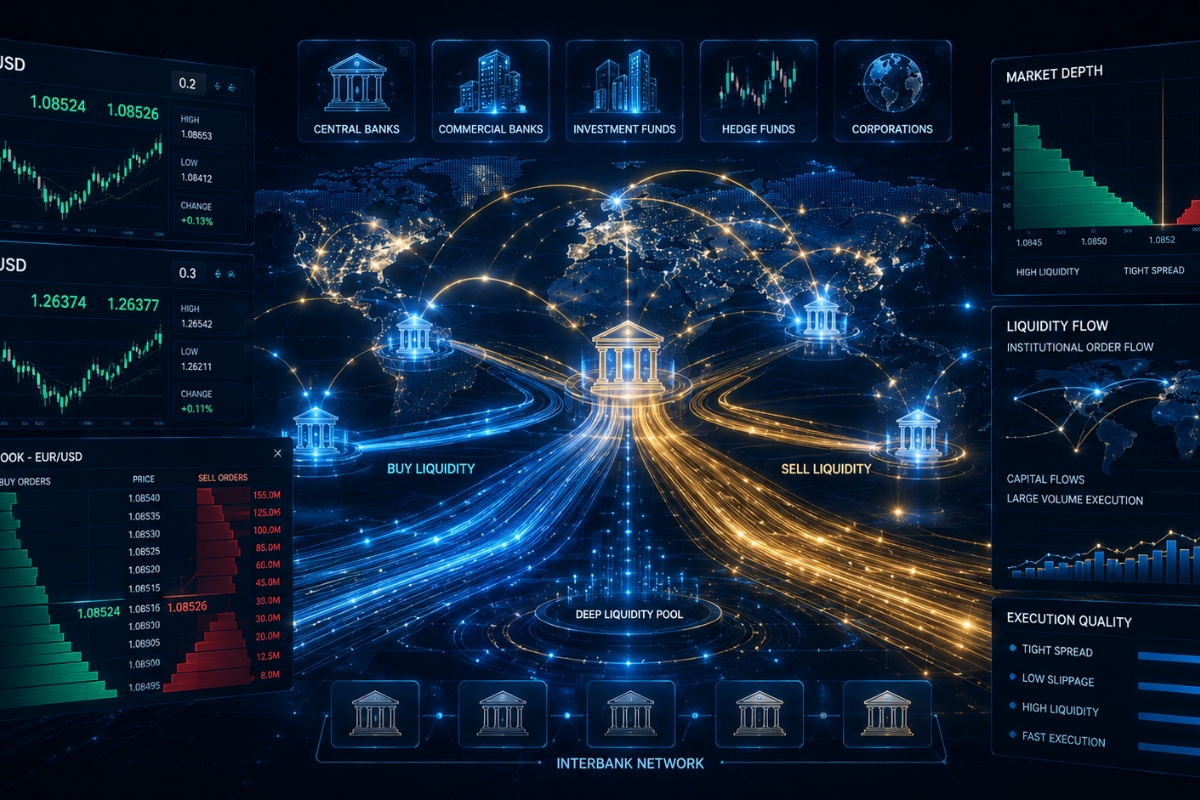
In the foreign exchange market, high liquidity ensures that large transaction sizes can be executed rapidly with minimal Slippage—the variance between your requested price and the actual execution price. When liquidity is thick, typical trading spreads remain tight, providing a smooth, highly predictable environment that allows technical indicators to function with optimal historic accuracy.
What is liquidity in the forex market?
Liquidity in forex represents the ease with which an asset can be converted into cash or another currency without disrupting its current price stability. The major currency pairs (such as EUR/USD or GBP/USD) possess elite liquidity profiles because hundreds of international commercial banks are constantly quoting buy and sell matching orders inside the book. This deep pool of capital acts as a financial shock absorber, allowing retail traders to enter and exit positions effortlessly without causing erratic price spikes.
To get the absolute best out of this deep volume pool, you must synchronize your trading terminal with specific regional banking hours.
When is the best time to trade based on liquidity?
The absolute best time to trade based on market liquidity is during the London and New York Session Overlap (13:00 GMT to 16:00 GMT), where both major global banking centers are simultaneously active. During this specific 3-hour window, institutional transaction volume peaks, causing bid-ask spreads to compress to their lowest daily thresholds. Reviewing the educational guidelines hosted on the MBroker highlights that trading within this high-volume overlap minimizes your execution friction, giving your technical strategies the maximum possible probability of structural follow-through.
In conclusion, mastering How Forex Market Works requires a structural understanding of decentralized OTC mechanics, fundamental price drivers, and the vital role of market depth. By combining this knowledge with the institutional execution tools provided on the XM platform and keeping risk strictly managed, you can safely turn market volatility into a scalable business model.

Thoren Vextal is a specialist in XM trading guides, offering practical insights and real-market experience to help traders improve their strategies and trading performance. Email: [email protected]