
 Tiếng Việt
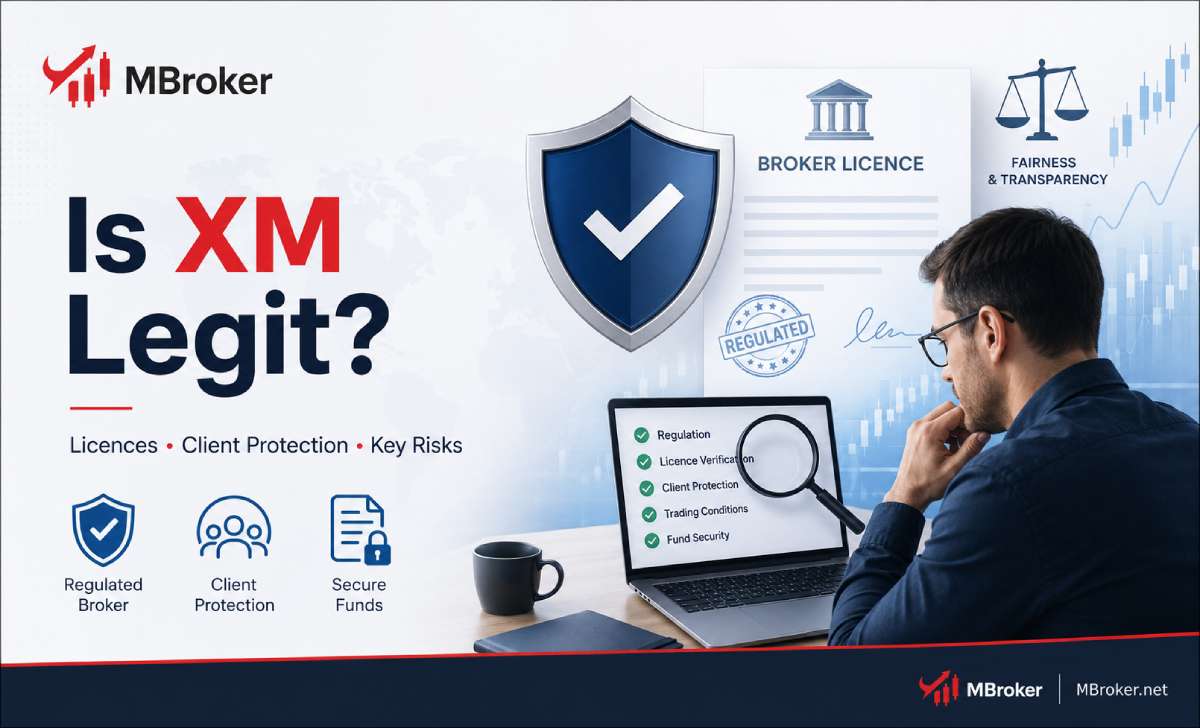
XM operates through identifiable regulated legal entities, so it is not an anonymous or unlicensed broker brand. However, users must verify the company, licence and official domain connected to their own account rather than relying only on the XM name.
The applicable licence depends on the contracting entity. XM’s global regulation page currently identifies XM Global Limited as regulated by the Financial Services Commission of Belize under licence number 8557558, while the CySEC register lists Trading Point of Financial Instruments Ltd under licence 120/10.
Client-money segregation and negative balance protection provide limited safeguards, but they do not guarantee that every loss, withdrawal dispute or insolvency event will be resolved in the client’s favour.
Regulation also does not remove trading risk. Leveraged Forex and CFD positions can lose all deposited trading capital, while volatility, gaps and liquidity conditions can prevent orders from executing at the expected price.
Is XM a Legit Broker?
XM can be considered a legitimate broker brand because regulated legal entities and official company records can be independently identified. However, “legitimate” does not mean risk-free, suitable for every trader or guaranteed to honour every expectation without dispute.
First, a broker legitimacy check should confirm five basic facts:
- The legal name of the company providing the account
- An active regulatory licence under the same company name
- A domain approved or used by that regulated company
- Legal documents identifying the contracting parties
- A formal procedure for complaints and disputes
For example, XM’s global regulation page names XM Global Limited and displays FSC Belize licence 8557558. Separately, CySEC’s official register records Trading Point of Financial Instruments Ltd under licence 120/10 and lists www.xm.com among its approved domains.
These records provide evidence that identifiable regulated companies operate under or alongside the XM brand. Nevertheless, they do not prove that every social-media account, referral page, mobile application or person claiming to represent XM is genuine.
Warning signs include requests to send money to a personal bank account, guaranteed-profit claims, pressure to deposit immediately, unofficial messaging accounts and website addresses that imitate XM without matching an approved domain.
Mbroker.net therefore treats legitimacy as a verifiable legal status, not as a recommendation to trade or a promise that users cannot lose money.
Which XM Entity and Licence Apply to Your Account?
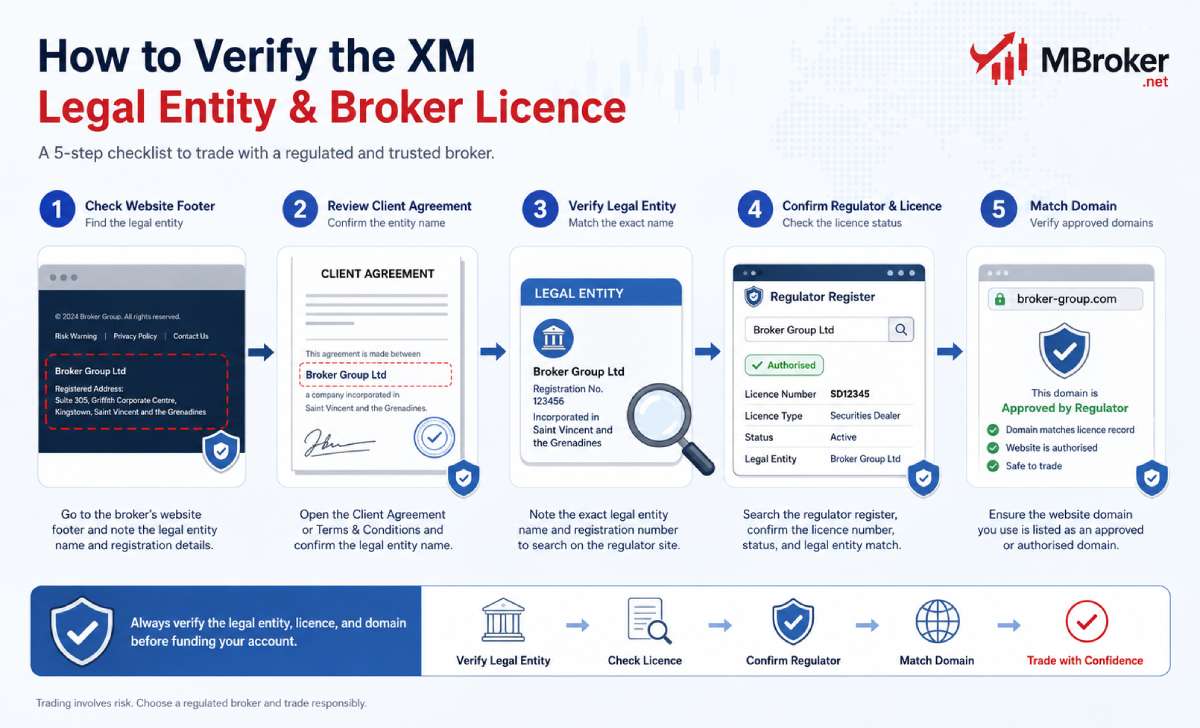
The entity named in your Client Agreement is the company that matters for regulation, complaints and contractual protection. A licence held by another company within a wider group may not automatically apply to your account.
XM can route users to different entities according to their country of residence, applicable law and service availability. Consequently, the company displayed to one user may differ from the company displayed to another.
The graphic below shows how to trace an XM account from the website and Client Agreement to the corresponding regulator register.
Use the following checks before relying on any regulatory claim:
| Check | Where to find it | What must match | Warning sign |
| Legal entity | Website footer and Client Agreement | Full registered company name | Only the brand name “XM” appears |
| Licence number | Regulation page and legal documents | Same number shown by the regulator | The number belongs to another company |
| Official domain | Regulator register | Domain used for registration or login | Misspelt or additional words in the domain |
| Registered details | Regulator register | Address and company details are consistent | Contact details cannot be verified |
| Contract jurisdiction | Client Agreement | Governing law and complaint route are stated | No accessible terms or dispute procedure |
Specifically, XM’s global-facing regulation page currently presents XM Global Limited under the FSC of Belize. The CySEC register separately confirms Trading Point of Financial Instruments Ltd, licence 120/10, and lists XM.com as an approved domain.
These examples should not be treated as a complete list of entities or as evidence that both licences apply to every client. Instead, compare the entity shown during registration with the latest regulator record and the legal documents provided for that account.
Is XM authorised to serve clients in every country?
No. XM does not offer the same services in every jurisdiction. Its global regulation page currently identifies restricted regions and states that users remain responsible for checking whether access is permitted under their local laws.
Therefore, successful access to a website does not by itself prove that the broker is authorised to serve a resident of that country.
How Are XM Client Funds and Accounts Protected?
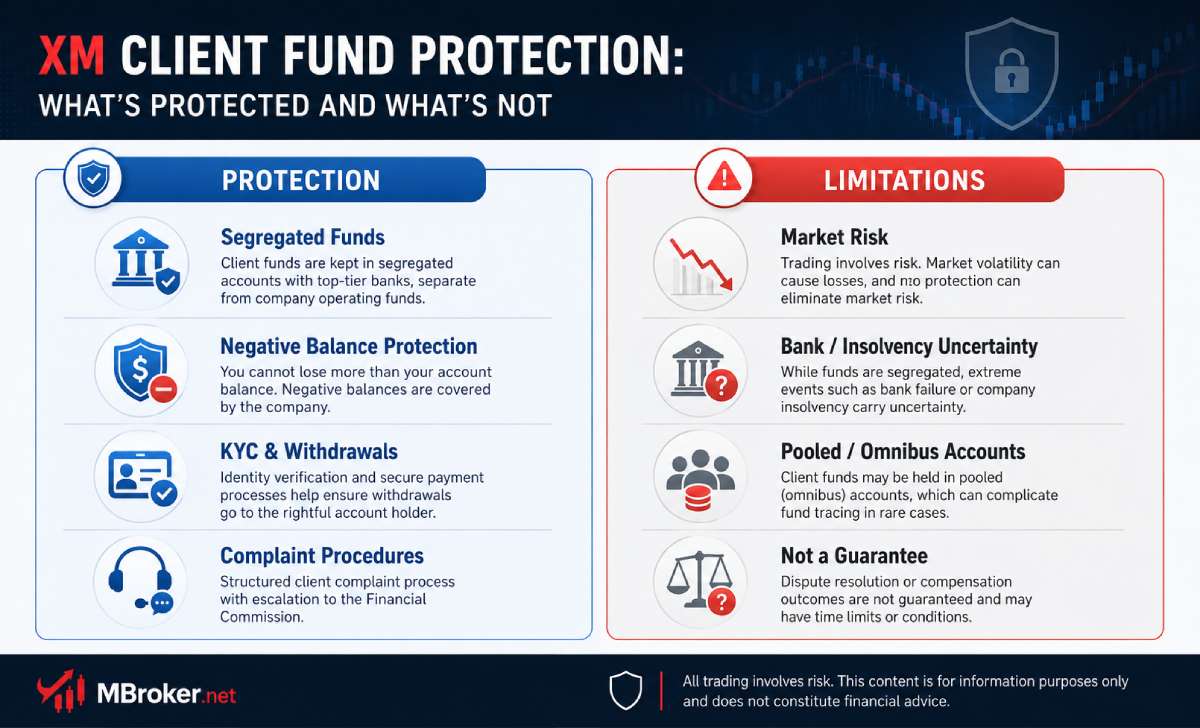
XM’s legal documents describe safeguards including segregated client money, negative balance protection and payment-security controls. However, users should read the agreement issued by their own entity because the scope and exceptions can vary.
The XM Global Client Agreement states that client money is held with an approved bank, separated from company funds and potentially pooled with money belonging to other clients in a general omnibus account.
Segregation is important because it separates client money from the broker’s operating funds in the company’s records. However, pooling means an individual client may not have a separate bank account held solely in their name.
The following visual distinguishes each safeguard from the protection it does not provide.
| Safeguard | What it may provide | Important limitation |
| Segregated client money | Separation from company operating funds | Does not eliminate every bank or insolvency risk |
| Omnibus account structure | Operational holding of pooled client funds | Funds may not be individually registered at the bank |
| Negative balance protection | Limits eligible CFD liability to account funds | Entity terms and abuse exclusions may apply |
| Payment-source verification | Reduces unauthorised deposit and withdrawal activity | May require additional checks or delay processing |
| Complaint procedure | Creates a formal dispute record | Does not guarantee the outcome requested by the client |
Does XM provide negative balance protection?
The XM Global agreement describes negative balance protection on a per-account basis. It aims to limit losses from CFDs, including related costs, to the total funds held in that trading account.
However, the same agreement reserves the right not to apply the policy where XM reasonably identifies prohibited practices such as arbitrage, coordinated internal hedging or abuse of the protection. Traders should therefore review both the protection clause and its exclusions.
What should you do if a withdrawal or account dispute occurs?
Keep a complete written record and use the complaint procedure issued by the contracting entity. Include account details, transaction references, payment evidence, relevant dates and the specific resolution requested.
In addition, avoid resolving disputes through unofficial messaging accounts. Submit information only through verified contact channels listed in the Client Agreement, member area or official legal documents page. XM maintains a legal-document hub containing its terms, risk disclosures and complaint-handling materials.
What Risks Remain Even If XM Is Regulated?
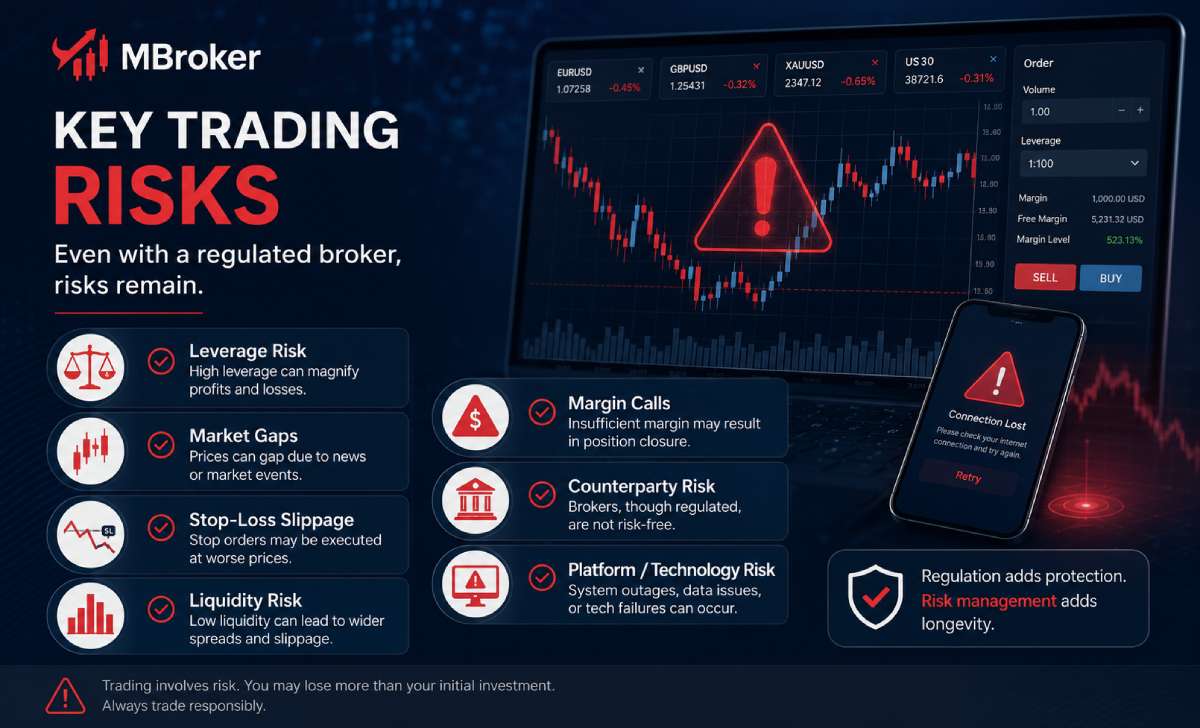
Regulation does not prevent losses caused by leverage, price gaps, margin close-outs, liquidity shortages or execution conditions. It establishes operating and conduct requirements, but it cannot control market movements or ensure profitable trading.
The visual below highlights the principal risks that should be assessed after the legal entity has been verified.
Risk warning: Forex and CFDs are leveraged products that can result in the loss of all capital allocated to trading. Do not treat a broker licence, segregated funds or negative balance protection as protection against normal market losses.
XM’s risk disclosure explains that leverage allows a relatively small market movement to have a disproportionately large effect on a position. An adverse movement may therefore cause the loss of the entire deposit used for derivative trading.
Other material risks include:
- Stop-loss execution risk: Volatile markets may cause an order to execute at a worse price than requested
- Gap risk: Prices may move directly from one level to another without trading at intermediate prices
- Liquidity risk: A position may be difficult or impossible to close under certain conditions
- Margin risk: Positions can be closed automatically when account equity falls below required levels
- Counterparty risk: Some derivative transactions are conducted through the company’s platform rather than a recognised exchange
- Technology risk: Internet, platform or communication failures can affect account access and order transmission
In particular, XM’s disclosure states that a stop-loss order cannot guarantee the maximum loss because execution may be worse than the preset price or temporarily impossible. It also explains that certain derivative transactions are conducted outside a recognised exchange, with the company acting as the counterparty.
XM is therefore legitimate in the limited sense that identifiable regulated entities operate under the brand, but that answer is only the beginning of a proper assessment. Before depositing, verify the exact company in your agreement, confirm its licence directly with the regulator and read the applicable client-money, complaint and risk documents. For further independent XM-related information, readers can consult Mbroker without treating its content as personal investment advice.

Thoren Vextal is Mbroker’s XM Reviews and How-To Guides Editor, covering broker reviews, regulation, comparisons and practical account guides.Email: [email protected]