
 Tiếng Việt
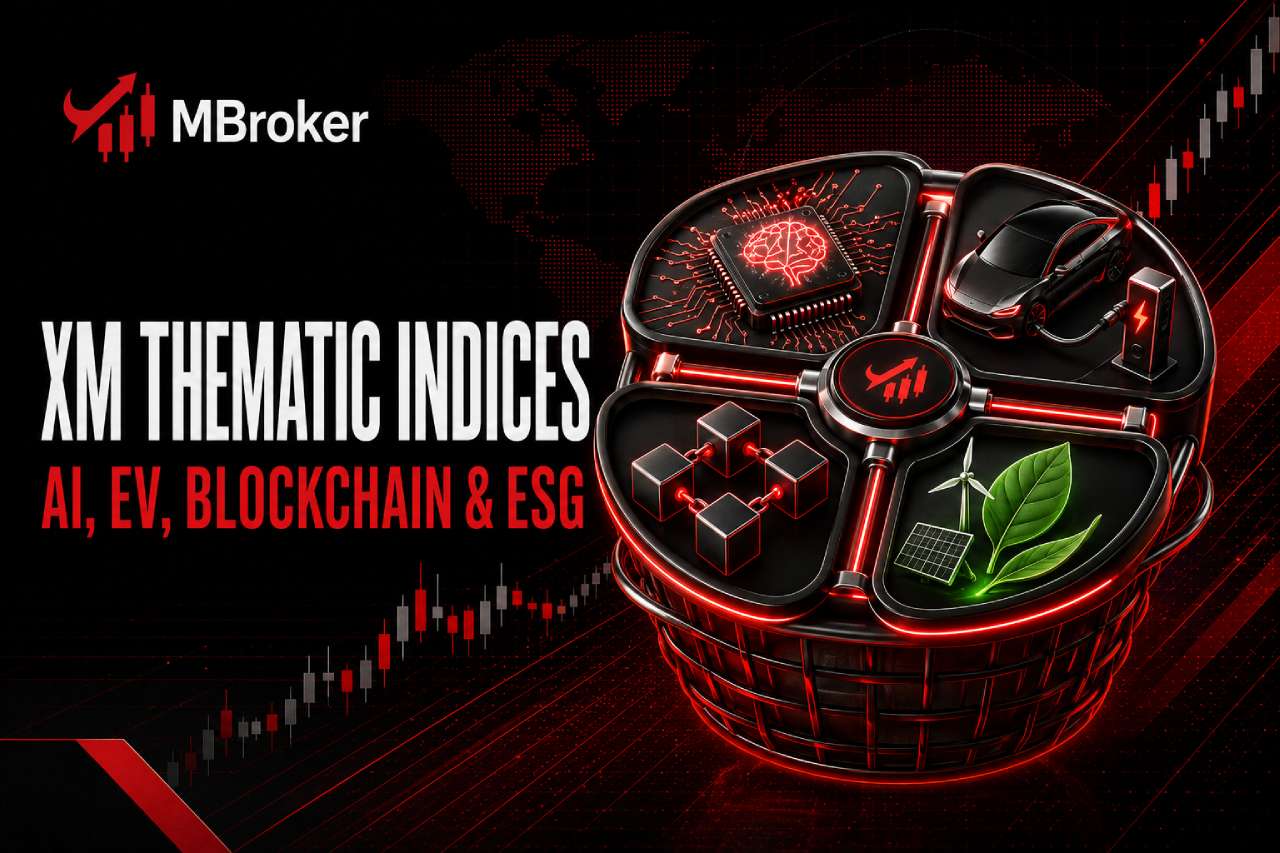
XM Thematic Indices are CFD instruments that track baskets of stocks grouped around a single innovation or growth theme, such as artificial intelligence, electric vehicles or blockchain technology, instead of a broad national market. Traders speculate on the price movement of the underlying basket through a single CFD position without owning any of the component shares.
XM Thematic Indices cover sectors including artificial intelligence, electric vehicles, blockchain and digital assets, and ESG-focused companies. Each theme groups companies from the same growth trend across different countries and stock exchanges into one tradable symbol.
Thematic indices differ from standard equity indices at XM because they track baskets of stocks grouped around a specific innovation or growth theme, such as artificial intelligence, electric vehicles or blockchain technology, rather than the overall performance of one country’s stock market. Standard indices such as major national benchmarks reflect broad economic conditions, while thematic baskets concentrate exposure on one innovation area.
XM offers Thematic Indices as CFDs, meaning traders can use leverage and do not own the underlying shares, while specific trading conditions and availability may vary depending on account type and client region. Mbroker outlines these product characteristics as an independent information resource, not as the official XM website. The section below explains what XM Thematic Indices are, how they function as CFDs, and which specific themes and sectors are currently included.
What Are XM Thematic Indices?
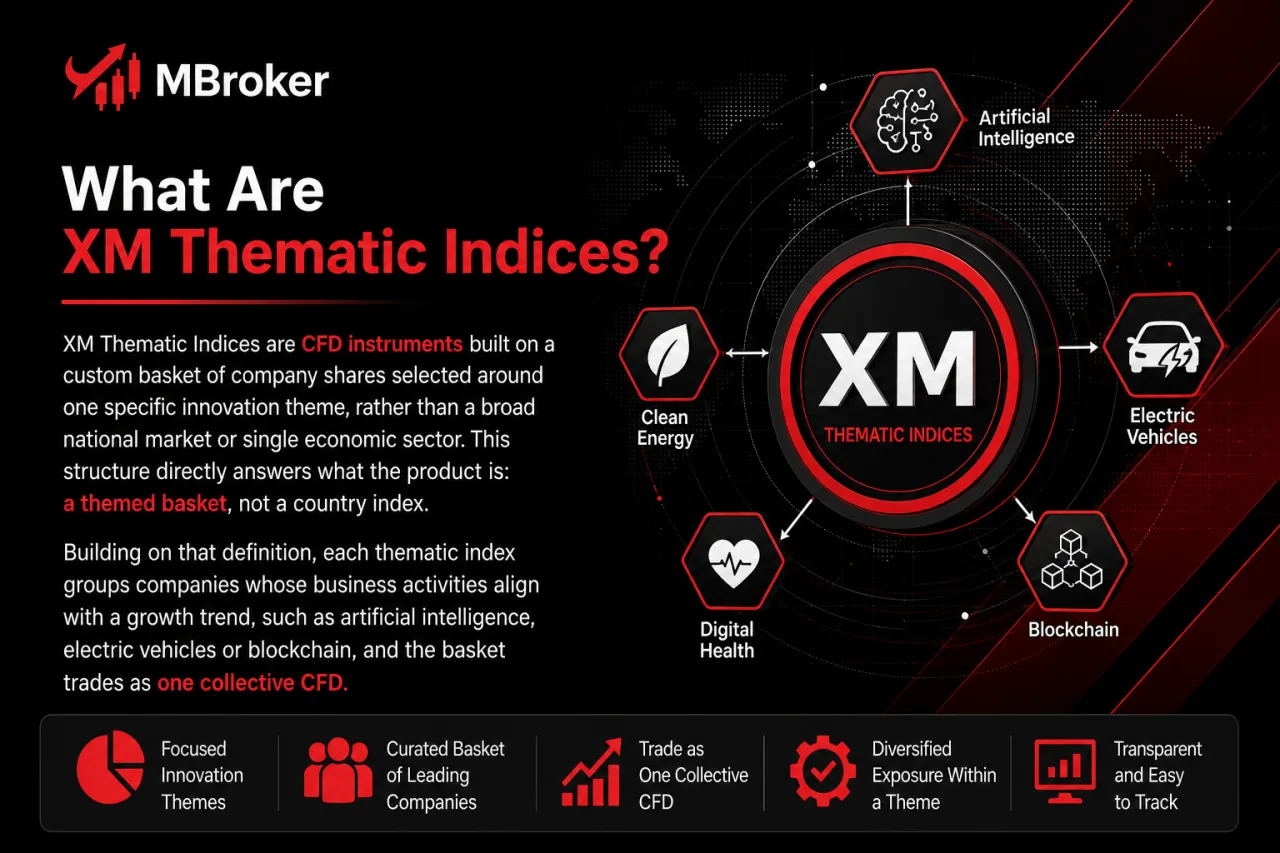
XM Thematic Indices are CFD instruments built on a custom basket of company shares selected around one specific innovation theme, rather than a broad national market or single economic sector. This structure directly answers what the product is: a themed basket, not a country index.
Building on that definition, each thematic index groups companies whose business activities align with a growth trend, such as artificial intelligence, electric vehicles or blockchain, and the basket trades as one cash-settled CFD rather than as separate share positions.
A few structural points clarify how the product works:
- Traders open a CFD position on the basket value, gaining exposure to price movement without acquiring shares of any component company.
- Settlement occurs in cash, meaning profit or loss reflects the price difference of the index rather than delivery of an underlying asset.
- XM acts as the CFD provider offering access to the instrument, while the composition and methodology of the underlying basket originates from the index creator, not from XM itself.
- Ownership rights such as dividends or shareholder voting do not transfer to the CFD trader, since the position only mirrors the basket’s price behavior.
This structure means thematic indices function similarly to other index CFDs available through XM, applying leverage and margin mechanics to a specialized, theme-based basket instead of a standard national benchmark.
How Do XM Thematic Indices Work?
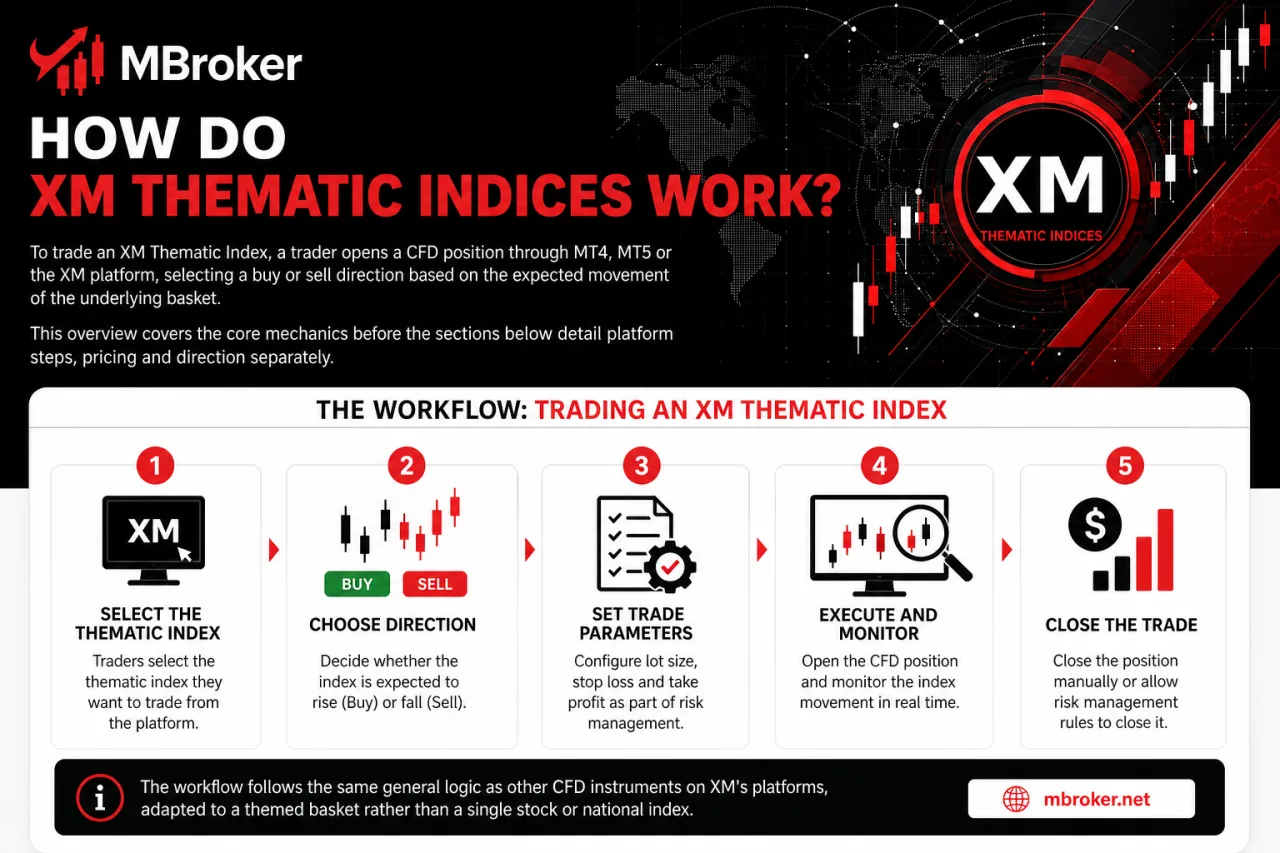
To trade an XM Thematic Index, a trader opens a CFD position through MT4, MT5 or the XM platform, selecting a buy or sell direction based on the expected movement of the underlying basket. This overview covers the core mechanics before the sections below detail platform steps, pricing and direction separately.
The workflow follows the same general logic as other CFD instruments on XM’s platforms, adapted to a themed basket rather than a single stock or national index.
- Traders select the thematic index symbol on their chosen platform and specify a trade volume before submitting the order.
- Prices update in real time based on the aggregated performance of the underlying basket’s component shares.
- Buyers open long positions expecting the basket value to rise, while sellers open short positions expecting it to fall.
- Positions close through cash settlement, since no physical shares of the underlying companies transfer to the trader at any stage.
The subsections that follow break down platform-specific order steps, how the index price reflects underlying performance, and how long versus short positions function within this CFD structure.
How Do You Open a Position on a Thematic Index CFD?
To open a position on a Thematic Index CFD, a trader locates the symbol in Market Watch, sets the volume, chooses an order type, selects buy or sell, then confirms the trade. This sequence covers order execution for thematic baskets across XM’s supported platforms.
The process follows five practical steps:
- Locate the thematic index symbol in the Market Watch window of MT4, MT5 or the XM app.
- Open the order window and enter the desired volume or lot size for the position.
- Select the order type, choosing between a market order for immediate execution or a pending order triggered at a specified price level.
- Choose the trade direction, buying to speculate on a rise in the basket value or selling to speculate on a decline.
- Confirm the trade to send the order, after which the position appears in the terminal with real-time profit and loss updates.
Platform compatibility applies across MT4, MT5 and the XM app, though exact symbol names, available order types and margin requirements depend on the account type and the client’s regulating XM entity. Traders verify these details on their trading platform before placing an order.
Can You Go Long and Short on Thematic Indices?
Yes, XM Thematic Indices support both long and short CFD positions, following the same buy-sell mechanics applied to other index CFDs on XM’s platforms. This directly confirms the direction question raised in this heading, and the mechanics behind both sides deserve a closer look.
Three points explain how both directions function on these baskets:
- Traders buy the thematic index to open a long position, targeting a rise in the underlying basket’s aggregated value.
- Traders sell the thematic index to open a short position, targeting a decline in that same basket value.
- Traders maintain either direction subject to standard CFD trading mechanics, including margin requirements applied equally to long and short exposure.
Margin obligations apply regardless of direction, since opening a short position still requires the same underlying leverage and margin framework as a long position on the identical instrument. No structural restriction limits thematic indices to one-directional trading, unlike some cash-settled products that only permit long exposure. Exact margin levels, available leverage and any direction-specific conditions depend on account type and the client’s regulating XM entity, so traders verify current terms on their trading platform before opening a position.
Which Themes and Sectors Do XM Thematic Indices Cover?
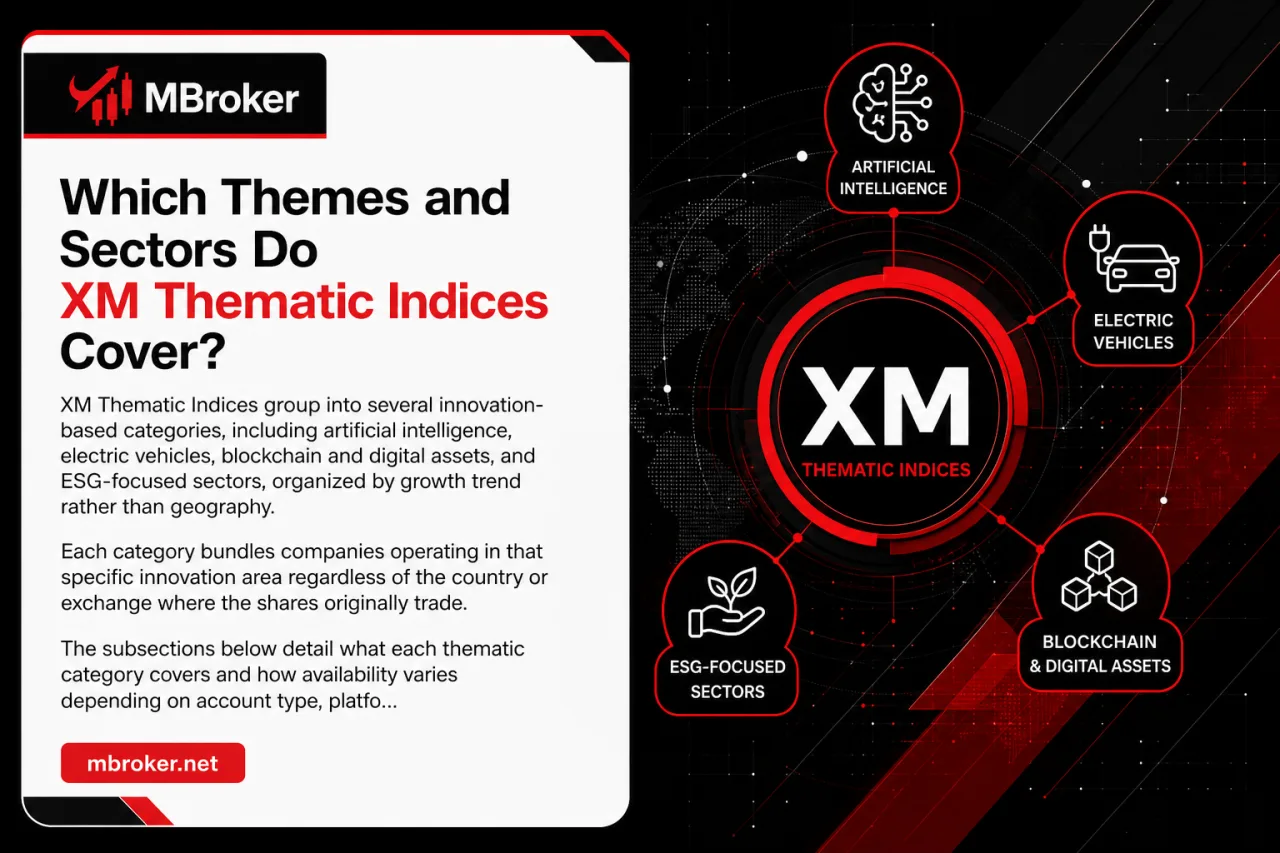
XM Thematic Indices group into several innovation-based categories, including artificial intelligence, electric vehicles, blockchain and digital assets, and ESG-focused sectors, organized by growth trend rather than geography. Each category bundles companies operating in that specific innovation area regardless of the country or exchange where the shares originally trade. The subsections below detail what each thematic category covers and how availability varies depending on account type, platform and the client’s regulating XM legal entity.
What Is the AI Thematic Index?
The AI Thematic Index is a CFD basket tracking shares of companies involved in artificial intelligence development or adoption, grouped under one tradable symbol. This narrows the AI theme raised in the heading down to its composition concept rather than any specific company list.
The basket generally draws from firms operating across the AI value chain, though exact constituents and weighting depend on the index provider’s methodology rather than XM’s own selection criteria.
- Companies developing AI software, machine learning models or related infrastructure fall within the typical composition concept.
- Firms adopting AI technology to enhance existing products or services also feature in this type of basket.
- The index aggregates these companies into one price, so a single CFD position tracks the combined basket movement instead of one stock.
This description reflects a general composition concept rather than investment advice or a recommendation to trade the instrument. Exact holdings, weighting methodology and rebalancing rules originate from the index provider, and traders verify current basket composition and availability on their trading platform before opening a position, since offerings vary by account type and regulating XM entity.
What Is the EV Thematic Index?
The EV Thematic Index is a CFD basket tracking shares of companies involved in electric vehicle manufacturing and the broader EV supply chain, grouped under one tradable symbol. This narrows the EV theme raised in the heading down to its composition concept rather than a specific list of holdings.
The basket generally draws from firms spanning production and supporting industries within the electric vehicle sector, though exact constituents and weighting depend on the index provider’s methodology rather than XM’s own selection criteria.
- Companies manufacturing electric vehicles or related components fall within the typical composition concept.
- Firms supplying batteries, charging infrastructure or other supply-chain inputs also feature in this type of basket.
- The index aggregates these companies into one price, so a single CFD position tracks the combined basket movement instead of one stock.
This description reflects a general composition concept rather than investment advice or a recommendation to trade the instrument. Exact holdings, weighting methodology and rebalancing rules originate from the index provider, and traders verify current basket composition and availability on their trading platform before opening a position, since offerings vary by account type and regulating XM entity.
What Is the Blockchain Thematic Index?
The Blockchain Thematic Index is a CFD basket tracking shares of companies engaged in blockchain technology development or adoption, distinct from direct cryptocurrency CFDs. This separates the blockchain theme from crypto exposure, and the distinction between equity-based tracking and direct crypto positions warrants further explanation.
The basket generally draws from firms building blockchain infrastructure or integrating the technology into existing operations, though exact constituents and weighting depend on the index provider’s methodology rather than XM’s own selection criteria.
- Companies developing blockchain platforms, protocols or related infrastructure fall within the typical composition concept.
- Firms adopting blockchain technology to support existing products or services also feature in this type of basket.
- The index aggregates these companies into one price, so a single CFD position tracks the combined basket movement instead of one stock.
A key structural difference separates this thematic index from cryptocurrency CFDs offered separately through XM. The Blockchain Thematic Index tracks equity prices of companies operating in the blockchain sector.
- Cryptocurrency CFDs track the price of a digital asset itself, such as Bitcoin or Ethereum.
- Traders gain thematic equity exposure through the Blockchain Thematic Index without any direct link to crypto price movement.
This description reflects a general composition concept rather than investment advice. Exact holdings, weighting methodology and availability originate from the index provider and depend on account type and the client’s regulating XM entity, so traders verify current details on their trading platform before opening a position.
How Do Thematic Indices Compare to Standard Equity Indices at XM?
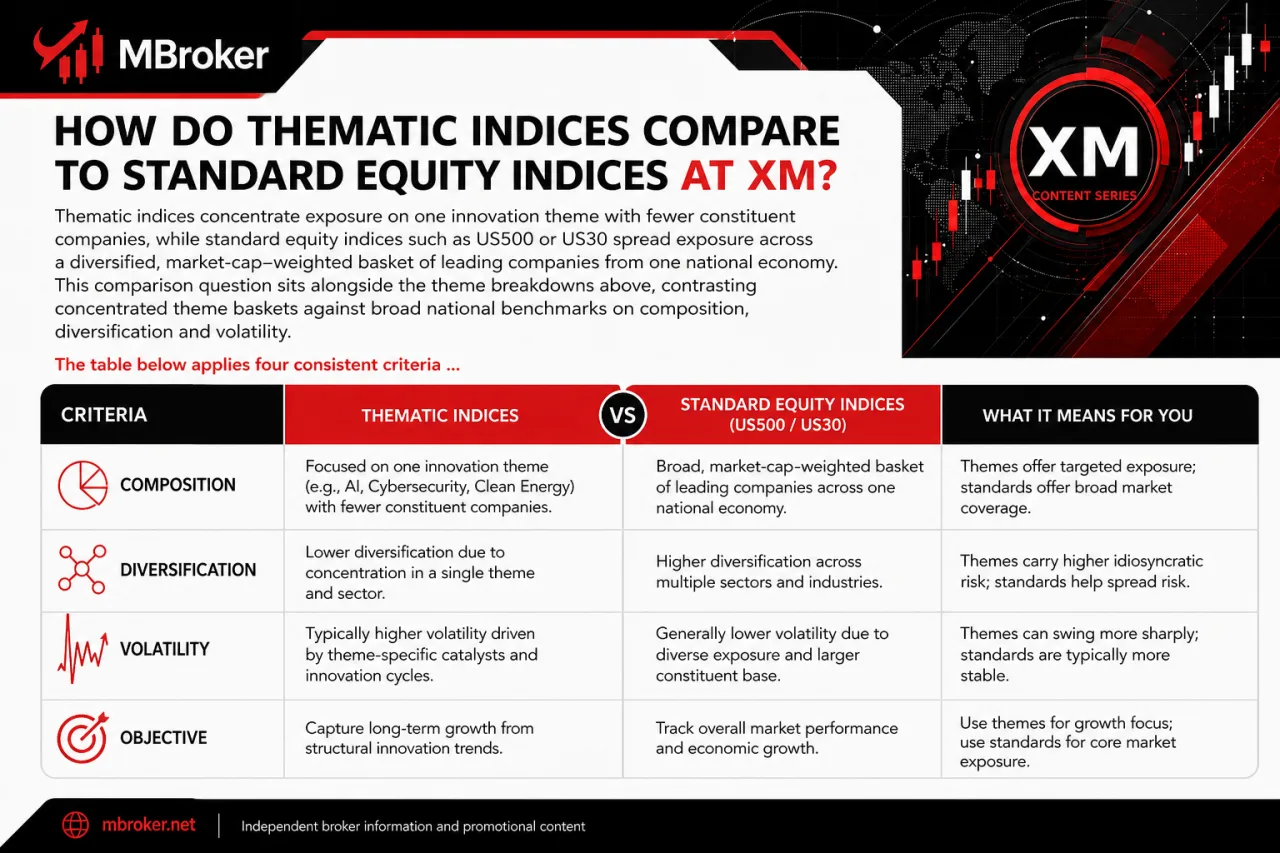
Thematic indices concentrate exposure on one innovation theme with fewer constituent companies, while standard equity indices such as US500 or US30 spread exposure across a diversified, market-cap-weighted basket of leading companies from one national economy. This comparison question sits alongside the theme breakdowns above, contrasting concentrated theme baskets against broad national benchmarks on composition, diversification and volatility.
The table below applies four consistent criteria to both product types.
| Criteria | Thematic Indices | Standard Equity Indices (e.g., US500, US30) |
|---|---|---|
| Composition logic | Companies grouped by innovation theme (AI, EV, blockchain, ESG) | Companies grouped by national market, weighted by market capitalization |
| Diversification level | Concentrated within one sector or growth trend | Spread across multiple sectors of one economy |
| Volatility profile | Sector-specific volatility tied to one theme’s news flow | Volatility reflects broad economic conditions |
| Typical use case | Targeted exposure to one growth trend | Exposure to overall market or economic performance |
Thematic baskets carry higher concentration risk since a single sector setback affects the entire basket, unlike diversified benchmarks where individual sector weakness typically has a smaller aggregate impact. Both instrument types trade as CFDs on XM’s platforms, though exact symbol availability, margin requirements and leverage depend on account type and the client’s regulating XM entity, so traders verify current conditions on their trading platform before opening a position.
What Are the Trading Conditions for XM Thematic Indices?
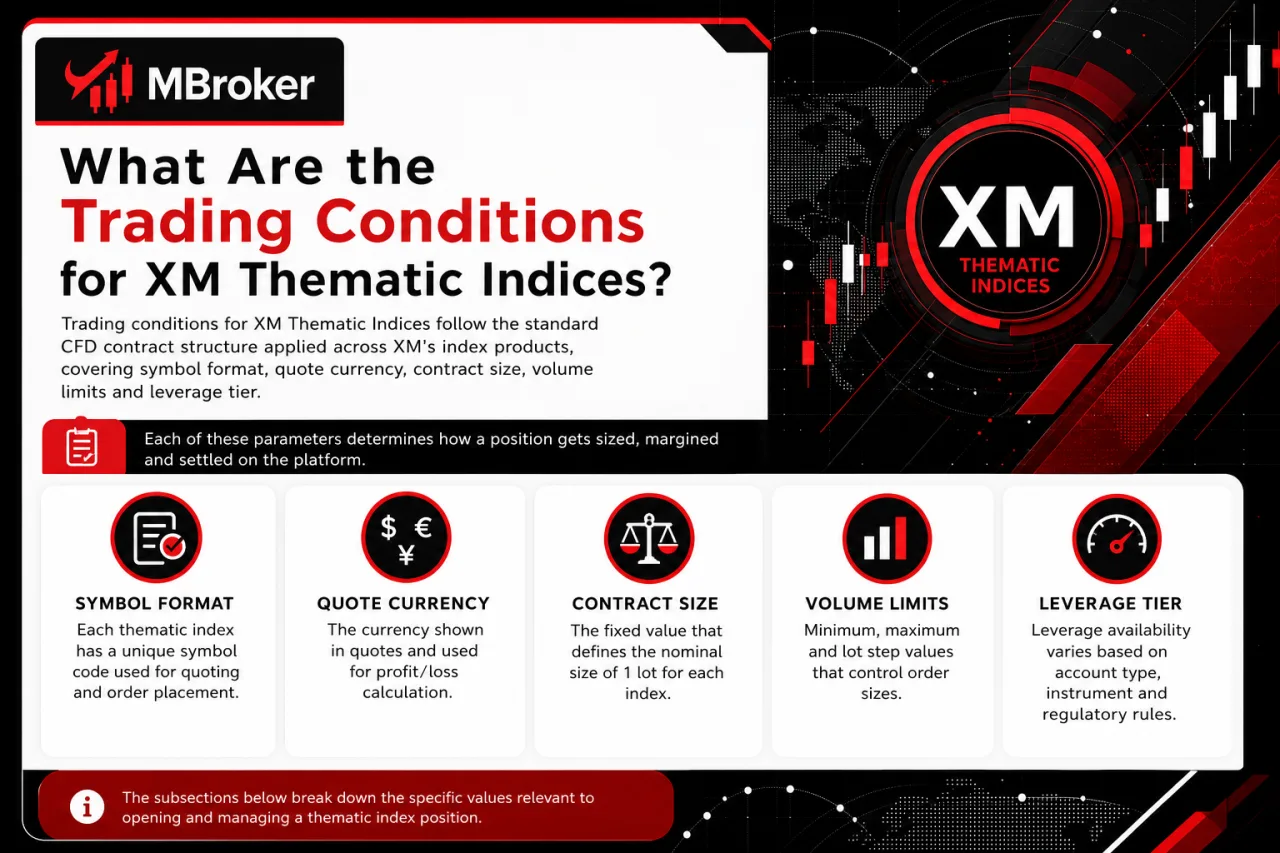
Trading conditions for XM Thematic Indices follow the standard CFD contract structure applied across XM’s index products, covering symbol format, quote currency, contract size, volume limits and leverage tier. Each of these parameters determines how a position gets sized, margined and settled on the platform. The subsections below break down the specific values relevant to opening and managing a thematic index position, since exact figures depend on account type, trading platform and the client’s regulating XM entity.
What Are the Trading Hours and Market Holidays for Thematic Indices?
Trading hours for Thematic Indices generally follow the underlying exchange sessions of the theme’s listed companies, subject to XM’s published market hours and holiday calendar. This directly answers the trading-session question raised in the heading, and the practical implications for scheduling trades deserve further detail.
Since each thematic basket pulls constituents from companies listed on different exchanges, the effective trading window reflects a composite of those sessions rather than a single fixed local market clock.
- Sessions align with the combined trading hours of the exchanges where the basket’s underlying companies list their shares.
- Liquidity and pricing typically narrow around the overlap of major exchange sessions relevant to that theme.
- Holiday closures on any significant underlying exchange affect the basket’s available trading window for that day.
XM publishes a market hours and holiday schedule covering all tradable instruments, including thematic indices, and this schedule updates periodically to reflect exchange calendar changes. Traders check XM’s official schedule on their trading platform or client area before opening a position, since exact hours and holiday adjustments depend on account type and the client’s regulating XM entity.
Is XM Thematic Indices Trading Available in Your Region and Account?
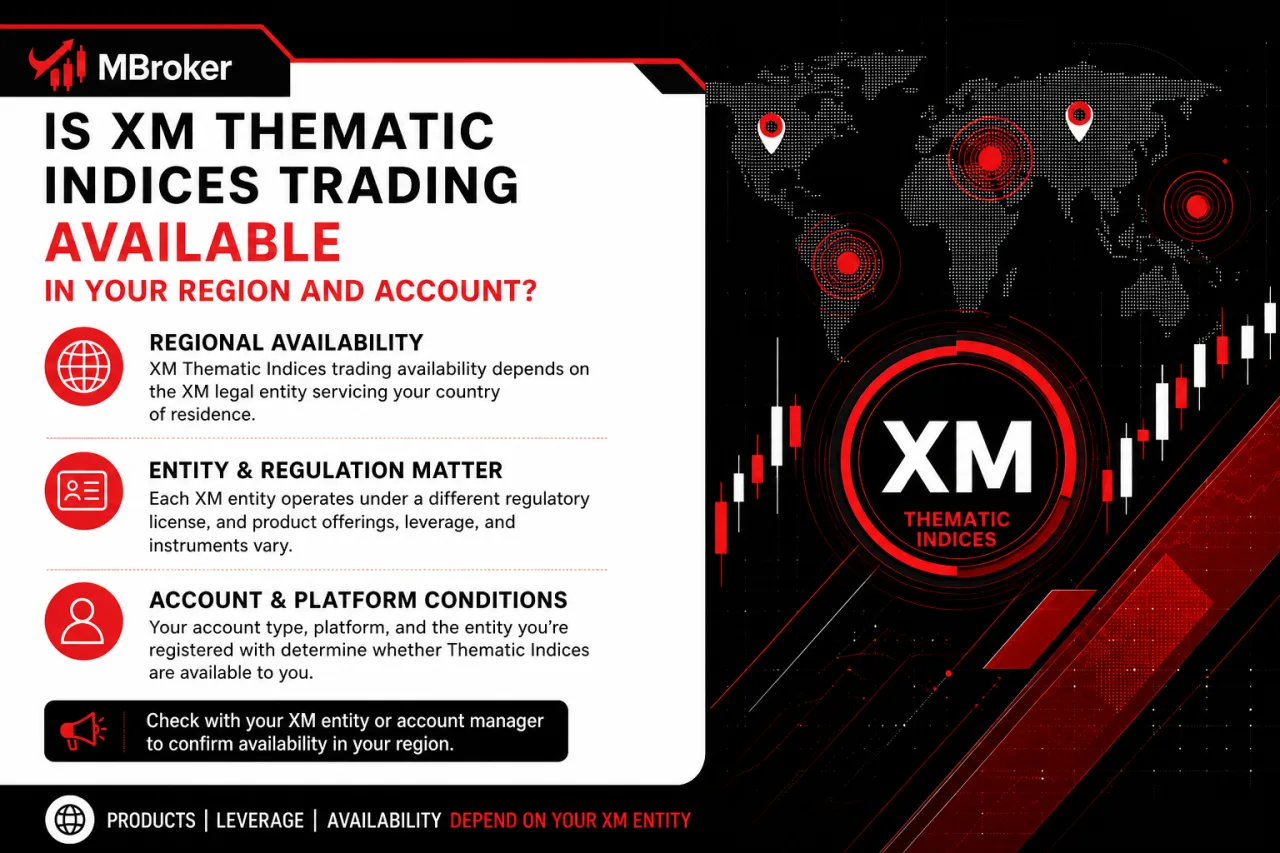
Availability of XM Thematic Indices trading depends on the XM legal entity servicing a client’s country of residence rather than applying uniformly worldwide. This directly answers the regional availability question raised in the heading, and the account and platform conditions tied to that entity deserve further explanation.
Each XM entity operates under a distinct regulatory license, and product menus, leverage tiers and instrument lists differ from one entity to another. A trader’s account gets assigned to a specific entity based on country of residence at registration, and that assignment determines which thematic index symbols appear on the trading platform.
- Confirm the servicing XM entity through the client area or account registration details before searching for thematic index symbols.
- Check symbol availability directly in Market Watch on MT4, MT5 or the XM app, since listed instruments vary by entity.
- Verify account type compatibility, as certain account categories may restrict access to specific CFD products.
- Consult XM’s official product pages or client support for the current instrument list applicable to a given entity.
No guarantee exists that XM Thematic Indices trade universally across every region, account type or platform. Traders verify current availability with their specific XM entity before attempting to open a position.
What Unique Risks Come With Trading Thematic Index CFDs?
Trading Thematic Index CFDs carries concentration risk as the primary distinguishing factor, since a narrow basket of theme-related companies reacts more sharply to sector-specific news than a diversified national benchmark. This concentration risk connects directly to several related exposures that traders account for before opening a position, covered in more detail below.
- Concentrated exposure ties the entire basket’s value to one growth trend, so weakness in that specific technology or sector drags the whole position lower.
- Regulatory news targeting a theme, such as new AI legislation or EV subsidy changes, moves the basket price more sharply than it would move a diversified index.
- Innovation-cycle shifts, including slower-than-expected technology adoption, affect thematic baskets more directly since the companies inside share the same underlying trend.
- Leverage amplifies both gains and losses on these positions, following the same margin mechanics applied to other XM CFD instruments.
These risks apply on top of standard CFD trading risk, including margin calls and rapid price swings. This overview does not constitute investment advice or a suitability assessment, and traders review XM’s official risk disclosure before opening a position.
Are Dividend Adjustments Applied to Thematic Index CFDs?
Yes, XM may apply dividend adjustments to open Thematic Index CFD positions whenever the underlying constituent companies pay dividends, following the same treatment used on standard equity index CFDs. This adjustment mechanism answers the dividend question raised in the heading directly, subject to XM’s official policy on the matter.
- Component companies within a thematic basket distribute dividends according to their own corporate schedules, independent of XM’s platform.
- Open long and short positions may receive a corresponding credit or debit reflecting that dividend event, mirroring the approach applied to broader index CFDs.
- Exact adjustment amounts, timing and calculation methodology follow XM’s official documentation rather than a fixed universal rule across all thematic symbols.
Traders confirm precise dividend adjustment treatment for a specific thematic index through XM’s official product pages or client support before opening a position, since practices vary by instrument, account type and regulating XM entity.
Conclusion
XM Thematic Indices allow traders to gain exposure to baskets of companies linked to themes such as artificial intelligence, electric vehicles, blockchain and ESG through a single cash-settled CFD position. Traders can open long or short positions without owning the underlying shares. However, unlike broad national indices, thematic baskets concentrate exposure on one innovation trend and may therefore react more strongly to sector-specific developments.
Before opening a position, traders should verify symbol availability, contract size, volume limits, trading hours, leverage, margin requirements, financing costs and dividend-adjustment rules directly through their XM account. These conditions, as well as the available thematic products, may vary by platform, account type, client region and the XM legal entity serving the trader.
Because thematic index CFDs combine concentration risk with leverage, changes in regulation, technology adoption, market sentiment or the performance of major basket constituents may produce rapid gains or losses. Traders should use conservative position sizes, maintain sufficient free margin and apply appropriate risk controls before committing real funds.

Sylas Trenven is a forex strategist who helps traders master risk and timing. His work focuses on behavior-driven market entries and portfolio optimization for XM users looking to trade with precision and discipline. Email: [email protected]