
 Tiếng Việt
Trading XM Gold starts with opening a live or demo account, searching for the XAUUSD symbol on the MT4 or MT5 platform, and placing a buy or sell order through a CFD contract. Gold on XM is traded as a Cash contract, not physical bullion. XM gold is offered as a Contract for Difference (CFD), which, as explained by XM, means traders speculate on price movement without ever owning the metal.
XM Gold trading hours generally follow a near 24-hour schedule from Monday to Friday. XM’s trading hours for gold generally follow the broader forex market schedule, typically running from Sunday evening through Friday, with a short daily maintenance break and no weekend sessions. Market holidays and reduced liquidity periods can shift these hours, so checking the live schedule inside the trading platform remains the most reliable method.
XM prices gold in USD as the quote currency, with contract size, minimum volume, tick value, and leverage all defined in the instrument’s official specification sheet, which traders should check directly on their trading platform before opening a position. These technical details directly affect margin requirements and potential exposure per trade.
Gold trading unavailability on XM is usually linked to closed market hours, platform connectivity issues, or account-specific restrictions rather than a permanent removal of the instrument. Confirming current status through the platform’s market watch panel resolves most access problems quickly.
Mbroker breaks down each of these areas step by step, starting with how to open and execute an XM Gold trade from start to finish.
How to Start Trading XM Gold (XAUUSD) Step by Step?

Starting an XM Gold (XAUUSD) trade follows a sequential process covering account setup, platform selection, symbol search, order configuration, and position monitoring. This overview breaks the process down before each stage gets its own detailed walkthrough below.
The process begins with account verification and platform choice, then moves through locating the XAUUSD symbol, selecting a buy or sell order, setting trade volume, and staying aware of leverage before execution. Once a position opens, monitoring and closing it completes the trading cycle.
Gold on XM trades exclusively as a CFD contract, meaning traders speculate on the XAUUSD price without acquiring or storing physical bullion at any stage. No delivery, vaulting, or ownership transfer occurs, since the position only reflects the price difference between entry and exit.
Beginners typically prioritize confirming account status and demo practice first, while more experienced traders may focus on leverage settings and order types since those directly affect margin exposure per lot. Each of these steps is expanded individually in the sections that follow.
What Is the XM Gold Trading Symbol and Which Platforms Support It?
The XM Gold trading symbol is XAUUSD, representing the price of one troy ounce of gold quoted in US dollars. This ticker follows a common convention across the forex and CFD industry, pairing gold’s chemical symbol with the US dollar currency code.
XAUUSD support extends across XM’s main trading platforms, which directly affects how beginners locate and execute the step-by-step process described below.
The symbol appears in the Market Watch or Instruments panel on both MT4 and MT5, the two platforms XM provides for desktop, web, and mobile access. Compatibility generally spans XM’s core account types, though exact availability depends on the specific account and legal entity registered under, since offerings can differ by region.
Traders search “XAUUSD” directly in the platform’s symbol search bar rather than browsing through unrelated categories. Confirming the symbol shows a live, updating price and appears tradable (not grayed out) before proceeding to order placement.
Checking symbol visibility and platform access first prevents confusion later in the trading sequence, since a missing or restricted symbol usually signals an account or connectivity issue rather than a genuine unavailability of gold trading.
How to Set Lot Size and Volume When Placing an XM Gold Order?
Setting lot size on an XM Gold order means entering the desired volume in the order box, where one standard lot represents 100 troy ounces of gold. This figure defines the base unit traders adjust before confirming a buy or sell position on XAUUSD.
Configuring volume correctly on the platform prevents order rejection and keeps exposure aligned with account equity. The order box on MT4 and MT5 restricts entries to a defined range and step size rather than accepting arbitrary numbers.
Minimum and maximum trade volume, along with the volume increment, are fixed by XM’s contract specification for XAUUSD and displayed directly in the platform’s order window.
Beginners typically start near the minimum allowed volume to limit margin usage while practicing order entry. Traders scaling positions gradually increase volume in fixed increments rather than entering values outside the permitted step, since the platform automatically rejects orders that fall outside the specified range.
Reviewing the specification sheet before every session confirms these figures remain current, since brokers periodically adjust volume parameters.
How to Apply Leverage and Manage Margin When Trading XM Gold?
Applying leverage on an XM Gold trade means selecting the leverage ratio tied to the account, then letting the platform calculate required margin automatically based on lot size and current XAUUSD price. Managing that margin properly involves the same variables the previous volume and lot size steps already introduced.
Leverage tiers on gold CFDs typically differ from standard forex pairs, since precious metals often carry separate maximum leverage caps under XM’s margin policy. XM applies leverage limits that vary by trading account type and by the legal entity a client is registered under, meaning two traders holding identical positions could face different margin requirements; traders should check the exact leverage tier applied to their own account and entity directly on their trading platform or client portal.
Required margin for a XAUUSD position generally follows this formula:
- Margin = (Lot size x Contract size x Price) / Leverage
Traders confirm the exact leverage assigned to their account through the trading platform or account profile before calculating expected margin. Higher leverage lowers the upfront margin needed to open a position. At the same time, it widens the potential swing in account equity from the same price movement.
Margin usage differs depending on trading experience:
- Beginners typically apply lower leverage or smaller lot sizes to keep margin usage conservative while learning order execution.
- Experienced traders monitoring multiple gold positions track free margin levels closely.
- Leverage amplifies both gains and losses without changing the underlying XAUUSD price movement itself.
Can You Go Long and Short When Trading XM Gold?
Yes, XM Gold supports both long and short positions, since the XAUUSD CFD structure lets traders speculate on price movement in either direction without holding the underlying metal. This dual-direction availability ties directly into the order placement steps already covered above.
Opening a long position means buying XAUUSD in anticipation of a price rise, while opening a short position means selling XAUUSD to speculate on a price decline. Both order types use the same buy/sell toggle inside the MT4 or MT5 order box described earlier, so no separate symbol or account setting is required to switch direction.
Practical use within the step-by-step order process follows the same volume, leverage, and margin rules already outlined, regardless of whether the trade opens long or short. Margin calculation and lot size limits apply equally to both directions, since the contract specification treats buy and sell orders as symmetrical in terms of size and increment.
Beginners typically test both directions on a demo account before committing to a live position, since practicing order entry in either direction builds familiarity with the platform’s execution flow without financial exposure.
What Are the XM Gold Trading Hours and Market Schedule?
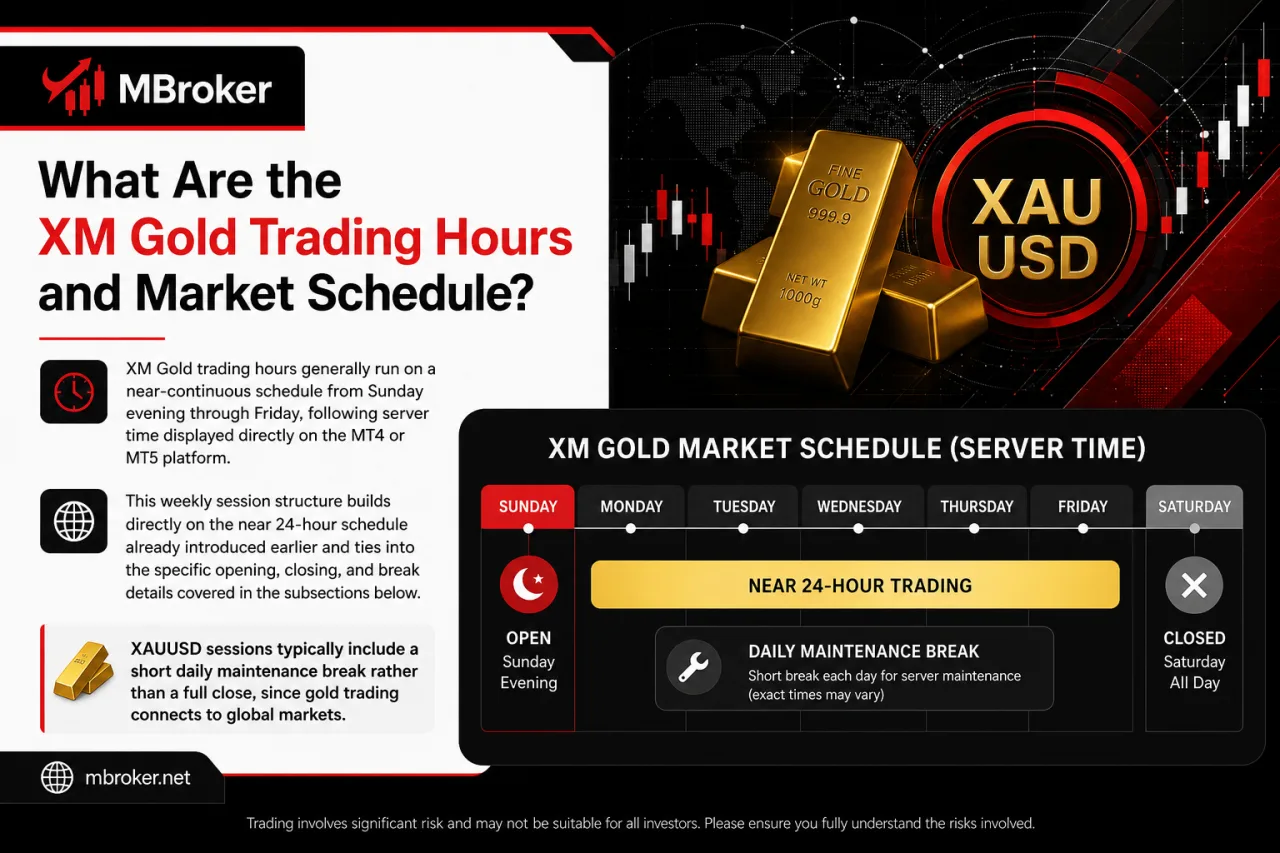
XM Gold trading hours generally run on a near-continuous schedule from Sunday evening through Friday, following server time displayed directly on the MT4 or MT5 platform. This weekly session structure builds directly on the near 24-hour schedule already introduced earlier and ties into the specific opening, closing, and break details covered in the subsections below.
XAUUSD sessions typically include a short daily maintenance break rather than a full close, since gold trading connects to global forex liquidity flows across different time zones. The exact open and close times, along with the daily break window, depend on the platform’s server time rather than the trader’s local time zone, which often creates confusion for beginners checking the schedule from different regions.
Market holidays and unscheduled liquidity gaps occasionally shift these hours outside the standard weekly pattern. Confirming the live schedule through the platform’s market watch panel or XM’s official trading hours page remains the most reliable way to verify current open and close times before placing an order.
Are There Gold Trading Holidays or Schedule Changes on XM?
Yes, XM publishes a holiday calendar that affects XAUUSD trading hours, since reduced liquidity and market closures during festive periods alter the standard near 24-hour schedule. This holiday impact builds directly on the weekly session structure and daily maintenance break already outlined above.
Gold trading activity tends to slow down or pause around major holiday periods, such as year-end holidays, when banks and exchange venues across multiple time zones reduce activity or close entirely. Traders should check XM’s official trading schedule for the exact dates affecting gold trading.
Three factors explain why this calendar matters for beginners:
- Shortened sessions during holiday weeks often produce wider spreads and thinner liquidity around the XAUUSD symbol.
- Server time adjustments during holidays sometimes shift the daily open and close beyond the usual pattern.
- Unscheduled gaps occasionally appear alongside planned holiday closures, compounding the schedule change.
Checking the official XM trading hours page or the platform’s market watch panel before entering a position remains the most reliable way to confirm the current holiday schedule, since these dates and hours get updated periodically rather than staying fixed year to year.
What Are the Key Contract Specifications for XM Gold CFDs?
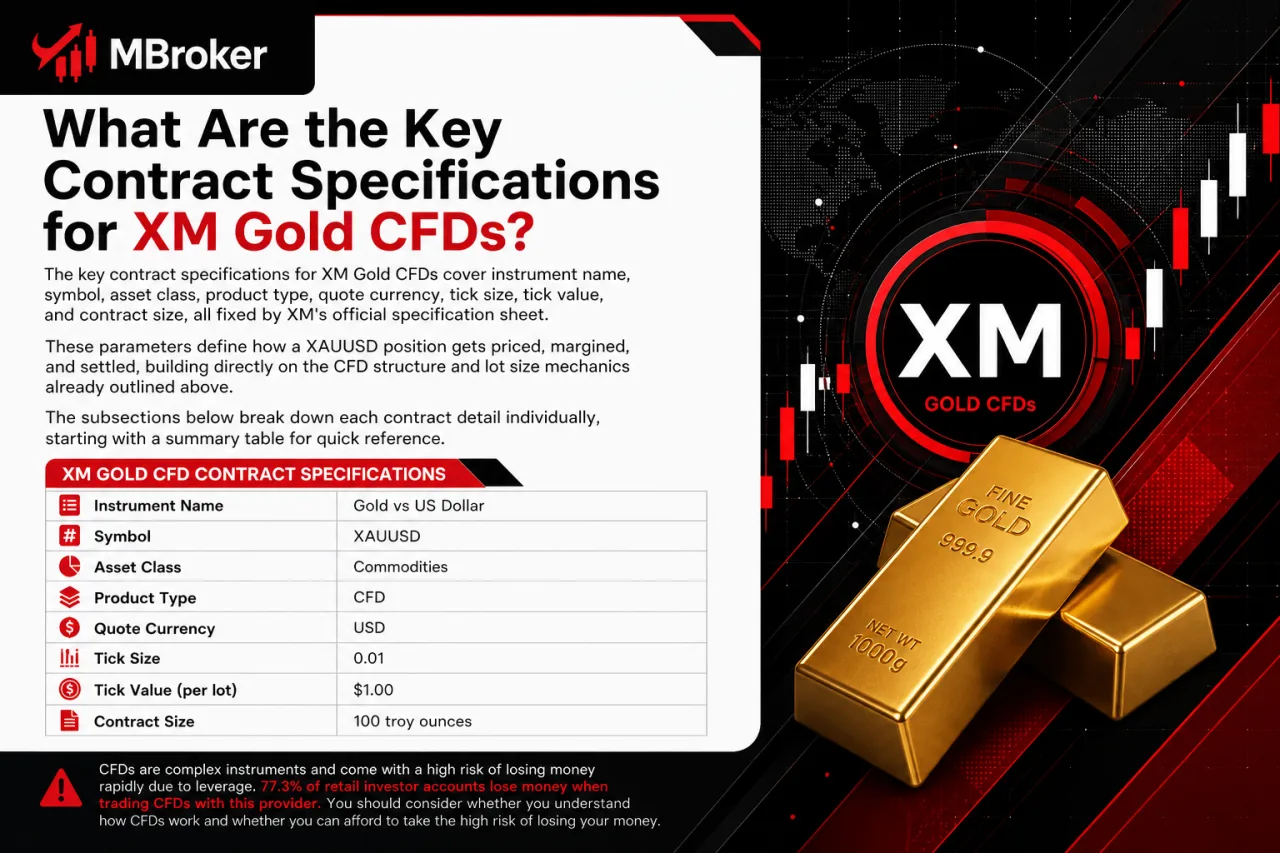
The key contract specifications for XM Gold CFDs cover instrument name, symbol, asset class, product type, quote currency, tick size, tick value, and contract size, all fixed by XM’s official specification sheet. These parameters define how a XAUUSD position gets priced, margined, and settled, building directly on the CFD structure and lot size mechanics already outlined above. The subsections below break down each contract detail individually, starting with a summary table for quick reference.
| Specification | Value |
|---|---|
| Instrument name | XM Gold |
| Trading symbol | XAUUSD |
| Asset class | Precious metal |
| Product type | Cash CFD (not futures-based) |
| Quote/Settlement currency | USD |
| Contract size | 100 troy ounces per standard lot |
| Tick size | Varies, check platform specification |
| Tick value | Varies, check platform specification |
As confirmed by XM, XM Gold is structured as a spot Gold CFD based on the live market price rather than a futures-based contract tied to a future delivery date; exact tick size, tick value, and other contract terms are defined in the instrument’s official specification sheet, which XM periodically updates.
Traders verify current tick size, tick value, and contract size directly on XM’s official contract specification page or the MT4/MT5 platform before opening a XAUUSD position, since these values affect margin calculation and profit/loss per pip.
Is XM Gold a Cash CFD or a Futures-Based Contract?
XM Gold operates as a Cash CFD priced against the live spot market, not a futures-based contract tied to a delivery or expiry date. This settlement mechanism directly follows the product type already listed in the specification table above, so the distinction matters for anyone comparing XAUUSD to physical gold ownership or exchange-traded gold futures.
A Cash CFD settles based on the current spot price movement between entry and exit, meaning the position carries no expiration date and requires no rollover to a new contract month. This differs from a futures contract, which specifies a fixed delivery date and typically forces traders to close or roll their position before expiry to avoid physical settlement obligations.
Owning physical gold involves storage, insurance, and eventual resale, none of which apply to a XAUUSD position on XM, since the CFD only reflects the price difference on the trader’s account. As confirmed by XM, the spot Gold CFD structure means positions can technically remain open indefinitely, subject to margin requirements, rather than closing on a set futures expiry date.
Traders comparing product types confirm the exact settlement terms on XM’s official contract specification page, since cash CFD structures generally avoid the rollover mechanics futures traders must manage separately.
Why Might XM Gold Trading Be Unavailable or Restricted for Some Clients?
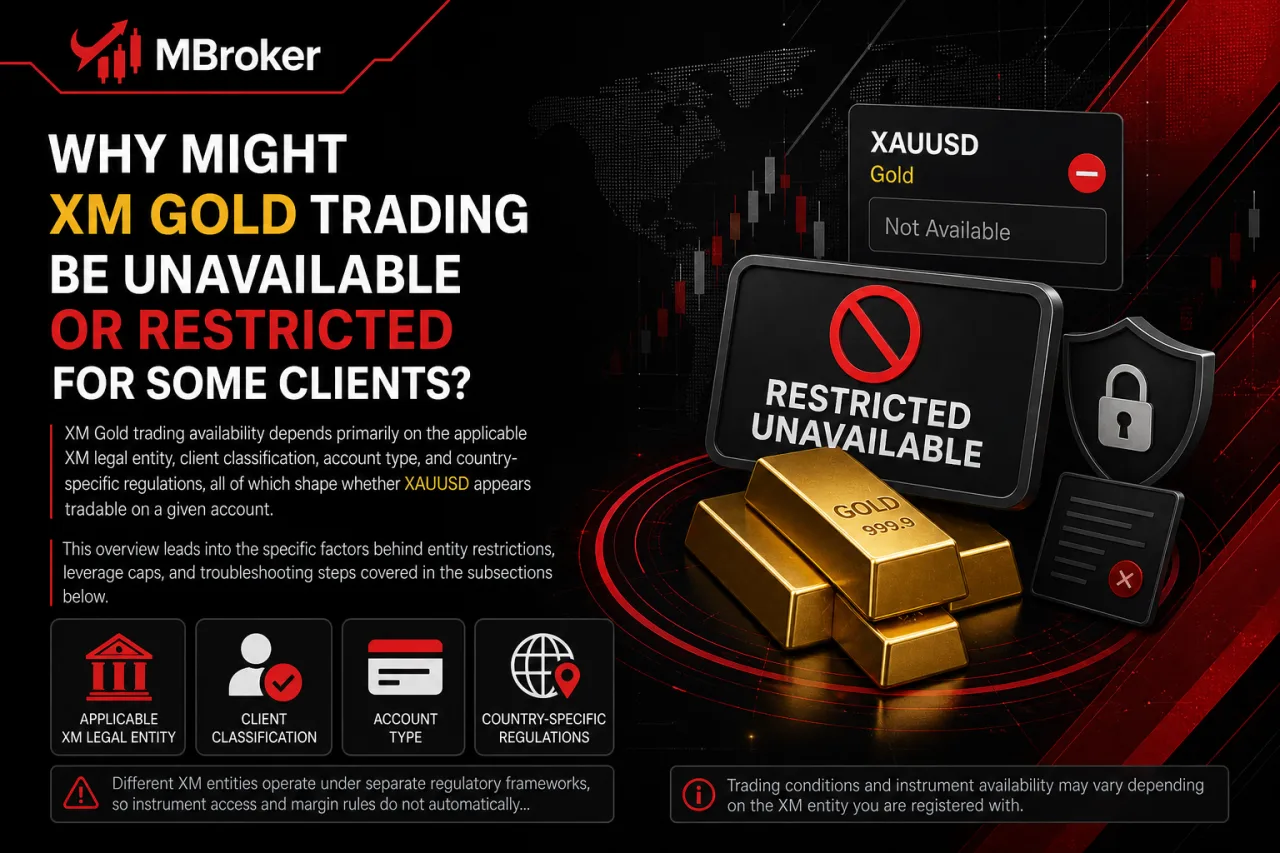
XM Gold trading availability depends primarily on the applicable XM legal entity, client classification, account type, and country-specific regulations, all of which shape whether XAUUSD appears tradable on a given account. This overview leads into the specific factors behind entity restrictions, leverage caps, and troubleshooting steps covered in the subsections below.
Different XM entities operate under separate regulatory frameworks, so instrument access and margin rules do not automatically match across regions. A missing or grayed-out symbol typically points to one of these account-level factors rather than gold trading being removed entirely from XM’s offering.
Which XM Account Types and Legal Entities Support Gold Trading?
XM Gold trading eligibility spans several account categories, including Standard, Micro, and Ultra Low accounts, though exact XAUUSD access and leverage caps differ by the specific XM legal entity a client registers under. This account and entity dependency connects directly to the leverage tiers and margin variability already covered earlier in this guide.
Retail-focused account types generally include gold among their tradable instruments, since XAUUSD sits within XM’s standard CFD offering rather than a restricted or premium-only category. Entity-level regulation, however, shapes the details differently:
- Regulated entities operating under stricter oversight frameworks typically apply lower maximum leverage on precious metals.
- Offshore-registered entities typically permit higher leverage tiers on the same XAUUSD symbol.
- Certain account types built for specific trading styles, such as swap-free arrangements, often carry adjusted conditions for holding gold positions overnight.
Because these variables shift by region and regulatory classification, traders confirm current eligibility, leverage tier, and any account-specific restriction directly through their client portal or by contacting XM support before placing a XAUUSD trade. Reviewing the specific legal entity listed on the account profile remains the fastest way to verify actual gold trading conditions. (Information reviewed as of the current publication date; verify before trading.)
What Additional Conditions Should You Know Before Trading XM Gold?
Additional conditions for XM Gold trading cover two niche areas outside the core order-placement flow: possible price adjustments tied to market events, and objective volatility risk tied to leverage. These points sit apart from the account, symbol, and margin steps already detailed above, so the subsections below address each one separately.
Unlike equity CFDs, spot gold carries no dividend payments, since XAUUSD tracks a commodity price rather than a company’s earnings distribution. Traders comparing gold to stock CFDs on XM confirm this distinction directly on the relevant specification sheets, as adjustment mechanics differ meaningfully between asset classes.
Are There Any Price Adjustments Applied to XM Gold Positions?
No, XM does not apply dividend-style price adjustments to XAUUSD positions, though overnight swap charges still apply based on position direction and holding time. This distinguishes gold’s cost structure from equity CFDs, where corporate dividend events trigger balance adjustments.
Three points clarify this adjustment mechanism:
- Absence of dividend events means gold positions never receive the credit or debit adjustments tied to a company’s earnings distribution, since XAUUSD tracks a commodity price rather than a stock.
- Presence of overnight swap or rollover charges still applies to gold CFDs held past the daily cutoff, following the same cash CFD structure already outlined earlier in this guide.
- Variability of exact swap rates depends on account type and the applicable XM legal entity, so figures shift periodically rather than staying fixed.
Traders confirm current swap rates and any adjustment mechanics directly through XM’s official fee documentation or the contract specification sheet on MT4/MT5, since detailed costs fall outside general product guides. (Information reviewed as of the current publication date; verify swap conditions before holding positions overnight.)
What Risks Are Unique to Trading Gold as a Leveraged CFD?
Gold-specific risks unique to XAUUSD stem from safe-haven demand shifts and USD correlation, both amplified by leveraged CFD exposure. These drivers sit apart from the general margin mechanics already covered above, adding instrument-specific volatility on top of standard leverage risk.
Three factors define this risk profile:
- Safe-haven flows can push gold demand higher during periods of geopolitical or economic uncertainty, and gold prices are often seen as more volatile than typical currency pairs during these periods.
- Inverse USD correlation means dollar strength or weakness often moves XAUUSD in the opposite direction, adding an extra variable beyond gold’s own supply and demand.
- Leverage amplification magnifies both gains and losses from these price drivers, since margin trading multiplies exposure relative to the capital committed.
Objective risk awareness matters because leveraged gold CFDs carry no guarantee of profit and can produce losses exceeding initial expectations, regardless of market direction. Traders review these dynamics through XM’s official risk disclosure documents before opening a XAUUSD position, since suitability depends on individual risk tolerance and account conditions rather than any predicted outcome.
Conclusion
Trading XM Gold through XAUUSD allows traders to speculate on gold price movements without purchasing or storing physical bullion. After opening an eligible live or demo account, traders can find XAUUSD on MT4 or MT5, select an appropriate volume, choose a buy or sell position, and review the required margin before placing the order. Because XM Gold is a cash CFD, both long and short positions are available, while leverage, spreads, swaps and trading conditions may vary by account type and XM legal entity.
Before trading, always verify the latest contract specifications and market schedule directly on the platform. Gold prices can react sharply to USD movements, economic data and geopolitical events, while leverage can magnify both profits and losses. Beginners should practise on a demo account, use conservative position sizes and maintain sufficient free margin before trading XAUUSD with real funds.

Sylas Trenven is a forex strategist who helps traders master risk and timing. His work focuses on behavior-driven market entries and portfolio optimization for XM users looking to trade with precision and discipline. Email: [email protected]